Encapsulation & Blending Solutions Supplier Since 2003

In commercial snack stick and meat stick production, acidification delivers the characteristic tangy flavor profile while reducing finished-product pH to 4.6–4.8 to support validated pathogen control and ambient shelf stability.
Achieving this pH target with free citric acid introduces severe processing challenges. Because free acid immediately lowers batter pH upon contact with free water, premature acidification destabilizes salt-soluble myofibrillar proteins before the structural matrix sets. This early protein denaturation reduces water- and fat-binding capacity, creating weak batter cohesion, poor stuffing performance, and fat separation during cooking.
Encapsulated Citric Acid isolates the active acid within a protective food-grade lipid shell during grinding, mixing, and stuffing. The acid releases only during thermal processing once the protein matrix has coagulated.
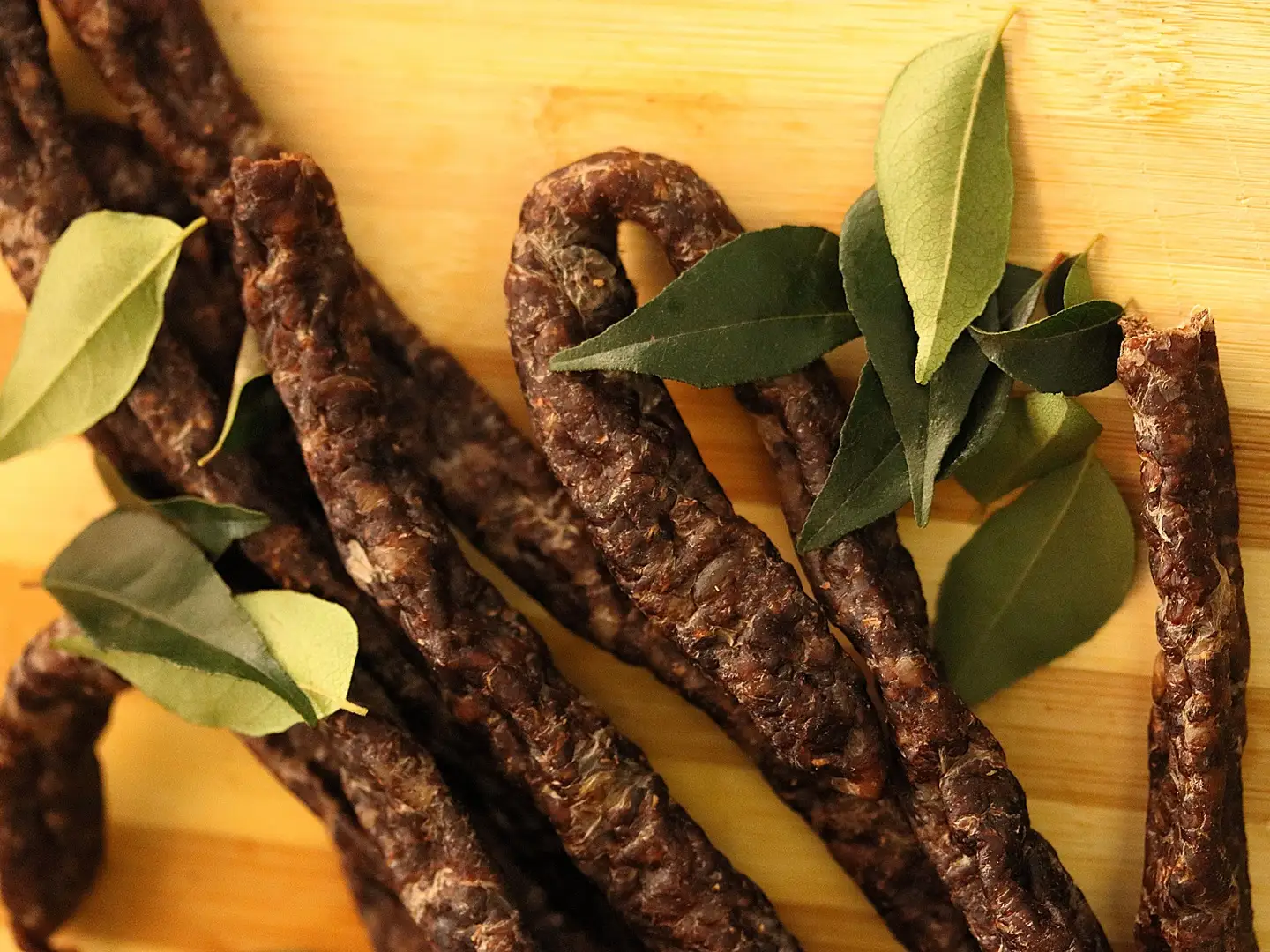
Comparing Acidification Routes in Snack Meats
| Method | Cycle Time | Flavor Profile | Operational Considerations |
|---|---|---|---|
| Bacterial Starter Cultures | 8–16 hours fermentation | Complex, traditional fermented profile | Requires dedicated fermentation rooms, tight temperature monitoring, and variable hold times. |
| Glucono Delta-Lactone (GDL) | Direct chemical breakdown | Milder acidity; prone to a bitter or metallic aftertaste at higher inclusion | Continuous acidification begins in the hopper; prolonged stuffing delays can degrade batter texture. |
| Encapsulated Citric Acid | Immediate (thermal trigger in smokehouse) | Sharp, clean citrus tang | Eliminates fermentation hold times; requires low-shear mixing controls to protect the lipid coating. |
Texture Failure Modes: “Short Meat” and Fat-Out
When free acid enters an unheated meat batter, it shifts the pH toward the isoelectric point of actomyosin (pH 5.0–5.4). This triggers two linked defects:
- “Short Meat” (Brittle Batter): When myofibrillar proteins denature prematurely, the batter loses elasticity and binding power. The resulting meat paste becomes crumbly and mealy, tearing during high-speed stuffing and failing to form a cohesive core.
- Fat-Out (“Grease Caps”): Without an intact protein network to trap fat globules, rendered lipids pool under the casing as smokehouse temperatures rise. This leads to greasy surface deposits, wrinkled casings, and a dry, rubbery interior.
Encapsulation keeps the active acid separated from muscle proteins until thermal gelation is complete, preventing both defects.
Mixing Protocol: Preventing Shear Rupture
The vegetable lipid coating provides thermal protection, but it remains susceptible to mechanical shear. Incorporate encapsulated citric acid using a low-shear protocol:
- Never add during bowl cutting or fine grinding: High-speed cutter blades and grinder plates crush the lipid shell instantly, releasing free acid into raw meat.
- The late-stage fold-in window: Fully extract proteins with salt, cure, water, and spices first. Add encapsulated citric acid during the final 60 to 90 seconds of low-speed paddle mixing—only long enough to distribute the particles evenly.
- Maintain batter temperature and stuff promptly: Keep the batter cold (ideally <4°C / 40°F) and transfer it directly to the stuffer to minimize friction within the hopper and augers.
Thermal Release Dynamics in the Smokehouse
Standard commercial grades utilize hydrogenated vegetable oil coatings calibrated to melt within a defined window—typically 55°C to 65°C (130°F to 150°F):
- Drying & Matrix Setting (<50°C / 122°F): During early drying and reddening stages, the lipid coating remains solid. Surface protein coagulation and initial gel formation proceed normally.
- Thermal Trigger & Acid Diffusion (>55°C / 130°F): Once internal meat temperatures exceed the coating’s melting point, the lipid liquefies. Citric acid diffuses throughout the set protein gel, lowering the internal pH to target levels without breaking the emulsion.
Dosage Calibration & Active Payload
Because encapsulated citric acid contains a lipid carrier (typically 15% to 30% by weight), formulas must be adjusted based on active payload:
Required Dosage = Target Active Acid ÷ Active Payload Percentage
For example, if your formula requires 1.0 kg of active citric acid and you are using an 85% active grade:
1.0 kg ÷ 0.85 = 1.18 kg of encapsulated citric acid
Commercial Supply & Technical Support
Niranbio supplies food-grade Encapsulated Citric Acid calibrated for high-throughput snack stick, summer sausage, and direct-acidified meat lines. Standard grades feature active payloads from 70% to 85% to match varying smokehouse cycles and target pH profiles.
FAQs
Why switch from GDL to encapsulated citric acid?
Reaching a finished pH below 5.0 with GDL often requires higher usage rates (0.5%–1.0%), which can leave a persistent bitter, chemical aftertaste. Encapsulated citric acid provides a cleaner, sharper acidic bite at lower inclusion rates without progressive acidification in the hopper.
At what internal temperature does encapsulated citric acid release?
Commercial lipid coatings typically soften and release between 55°C and 65°C (130°F–150°F). This ensures the acid is held back until the primary protein gel has coagulated around the fat particles.
Can encapsulated citric acid be used with standard paddle mixers?
Yes. Standard single- or twin-shaft paddle mixers running at low RPM work well. Limit the mixing cycle to 60–90 seconds once the encapsulated acid is introduced to prevent coating erosion from abrasive friction.
When should the finished pH of the meat stick be measured?
Measure internal pH after thermal processing and initial chilling. Because the acid diffuses through the cooked protein matrix as the coating melts, accurate equilibrium readings require testing after the product core has completed its heating cycle.