Encapsulation & Blending Solutions Supplier Since 2003

In powdered drink mixes, free citric acid is the established industry benchmark for delivering sharp, refreshing acidity. For standard single-serve sachets distributed through climate-controlled supply chains, conventional citric acid performs reliably and economically.
However, when formulations are packaged in multi-serving tubs, exported through humid shipping routes, or blended with reactive ingredients like effervescent carbonates, free citric acid readily absorbs atmospheric moisture. This leads to powder caking, loss of flowability, and premature chemical reactions before consumption.
Encapsulated Citric Acid applies a microscopic protective barrier around active acid granules. This barrier isolates the acid from ambient humidity and adjacent ingredients during storage, then releases completely once agitated in water.
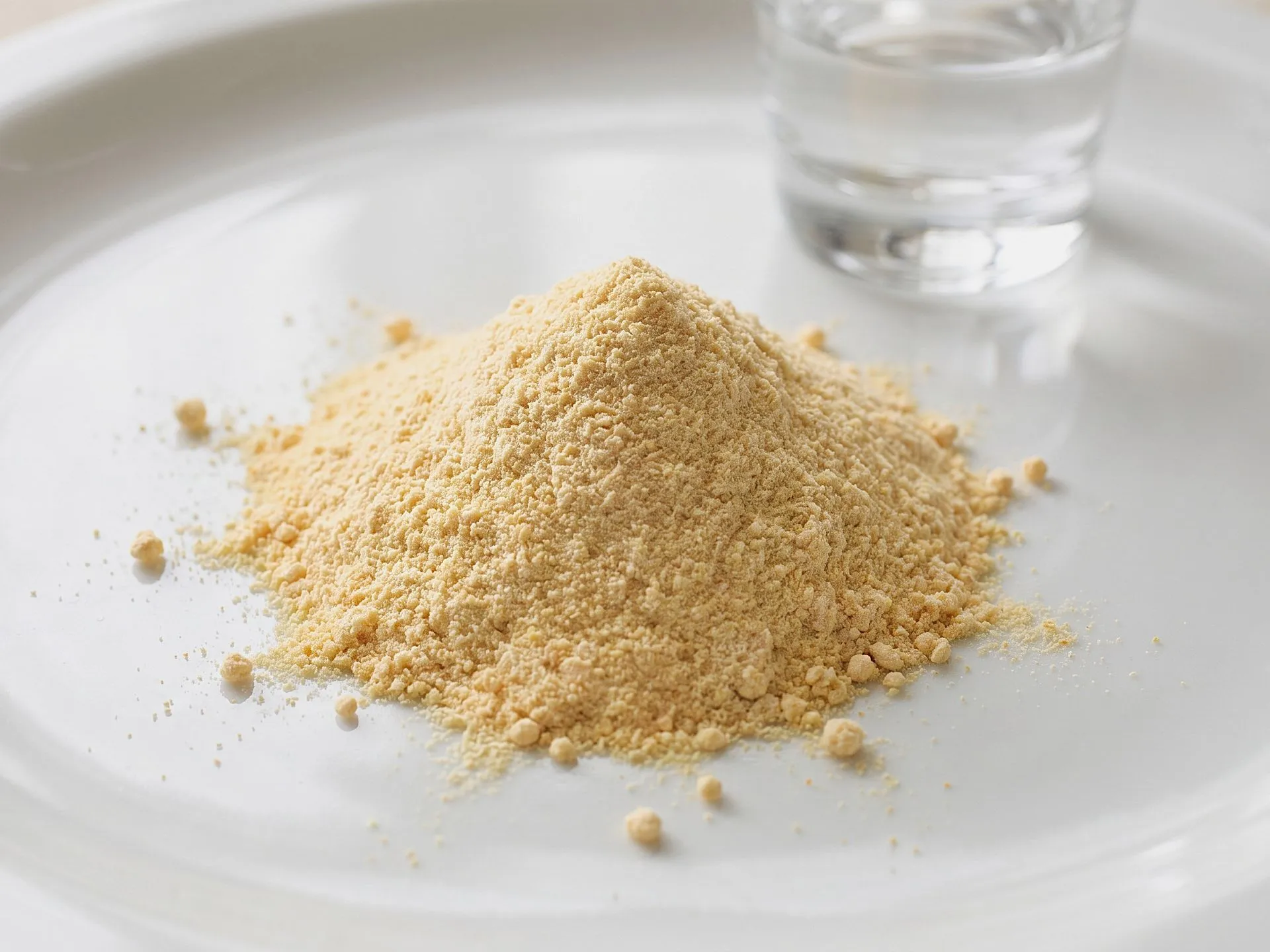
Where Free Citric Acid Meets Environmental Limits
Under ambient humidity exposure, unencapsulated citric acid introduces specific packaging and stability constraints:
- Multi-Serving Tub Hardening: Every time a consumer opens a 30-serving sports nutrition tub (such as pre-workouts, BCAAs, or electrolyte powders), ambient humidity enters the headspace. Free citric acid absorbs this moisture, forming inter-particle liquid bridges that turn loose powder into a hard brick within weeks of opening.
- Premature Effervescent Neutralization: In effervescent mixes, dry-state moisture enables free citric acid to react directly with sodium or potassium bicarbonate inside the pouch. This pre-reaction off-gasses carbon dioxide during shelf life, leaving the consumer with a flat, under-acidified drink at reconstitution.
- Export & High-Humidity Transit: Ocean container shipping through tropical routes and warehousing in unconditioned markets regularly pushes powder blends past their moisture-tolerance thresholds, causing severe caking before reaching retail shelves.
- Packaging Line Clogging: Fine free acid crystals generate static charge and absorb moisture in open blending rooms, causing hopper bridging, auger friction, and powder dust contamination along heat-sealed bag seams.
How Encapsulation Protects Dry Beverage Blends
Beverage-grade encapsulated citric acid provides a dual-phase functionality designed specifically for dry mix manufacturing:
- Dry-State Barrier: The protective food-grade coating isolates the core acid from ambient water vapor and neighboring reactive ingredients. This maintains free-flowing powder mobility, preserves blend homogeneity, and extends shelf stability to 18–24 months without requiring high-cost foil laminates.
- Mechanical Cold-Water Release: Unlike thermal-release grades used in meat or baking, beverage-grade encapsulation uses an ultra-thin, cold-water-dispersible shell. The coating breaks apart under standard consumer agitation—such as shaking in a sports bottle or brisk spoon stirring—releasing the citric acid into solution within seconds without leaving an oily surface film or sediment.
Target Drink Mix Applications
| Application | Primary Formulation Stress | Functional Benefit of Encapsulation |
|---|---|---|
| Multi-Serve Sports Nutrition (Pre-Workouts & BCAAs) | Repeated lid openings and moisture-sensitive actives (amino acids, creatine). | Maintains loose, free-flowing powder and consistent scoop dosing across the entire 30-to-60-day consumption period. |
| Effervescent Tablets & Drink Mixes | Dry-state acid-base neutralization between citric acid and carbonates. | Physically separates the acidulant from bicarbonates until water immersion, maximizing carbonation volume in the glass. |
| Export-Grade Drink Sticks & Pouches | High humidity and temperature swings during international transit. | Provides ingredient-level moisture protection, preventing bag-hardening in non-climate-controlled retail distribution. |
| Vitamin & Functional Beverage Powders | Moisture-induced oxidation of sensitive botanical extracts and flavor oils. | Eliminates localized low-pH moisture zones that accelerate terpene degradation and off-flavor development. |
Dosing & Formulation Calibration
Because encapsulated citric acid contains an active core plus a protective shell, batch inclusion rates must account for the active payload (typically 80% to 85% active citric acid by weight):
Required Dosage = Target Active Acid ÷ Active Payload Percentage
Example: If an existing recipe calls for 10.0 kg of free citric acid and you select an 85% active grade:
10.0 kg ÷ 0.85 = 11.76 kg of encapsulated citric acid per batch.
The rounded granule morphology also reduces internal hopper friction, allowing for cleaner auger cutoffs and faster cycle times on vertical form-fill-seal (VFFS) lines.
Summary
For manufacturers producing powdered drink mixes at commercial scale, physical stability is closely connected to product quality and consumer experience. A formulation that performs well immediately after production can still develop problems if moisture exposure causes caking, poor flowability, uneven acidity, or premature reaction during storage.
Encapsulated Citric Acid addresses one of the key sources of powdered drink mix instability by providing a protective barrier around the citric acid component. This makes it particularly relevant when conventional free citric acid is exposed to challenging humidity conditions, repeated container opening, moisture-sensitive ingredients, or reactive effervescent systems.
Niranbio supplies food-grade Encapsulated Citric Acid for powdered drink mixes and other dry powder applications, with product specifications, technical documentation, and application support available for commercial development and sourcing projects. The appropriate grade can be evaluated based on active citric acid content, particle size, coating system, release requirements, blend composition, and intended storage environment.
FAQs
Will encapsulated citric acid dissolve in cold water?
Yes. Beverage grades are formulated to release under standard physical agitation. Shaking in a standard shaker bottle or stirring with a spoon breaks down the thin protective coating, fully dissolving the citric acid without requiring warm water.
Does it leave an oily ring or cloudy residue in clear drinks?
No. The ultra-thin coating system is engineered to disperse cleanly into the aqueous phase at beverage inclusion levels, leaving no floating lipid ring at the liquid surface and no gritty particulate at the bottom.
How does it stop pre-workout powders from clumping?
Hygroscopic ingredients like amino acids and botanical extracts readily draw moisture into multi-serve tubs. Encapsulating the citric acid eliminates one of the primary drivers of moisture bridging, keeping the powder granular and easy to scoop throughout its shelf life.
Does encapsulation alter the tartness or flavor profile?
No. The active core is pure, food-grade citric acid. Once released into water, the tartness onset, flavor brightness, and finished-product pH are identical to solutions made with conventional citric acid.
Can using encapsulated acid reduce packaging material costs?
In many export and pouch applications, yes. Brands often rely on expensive multi-layer aluminum barrier films purely to prevent free citric acid from pulling moisture through the packaging. Protecting the acid at the ingredient level allows manufacturers to transition to more cost-effective barrier films without sacrificing shelf stability.