Encapsulation & Blending Solutions Supplier Since 2003

Encapsulated calcium propionate provides mold control while helping reduce the impact of regular calcium propionate on fermentation and flavour. A food-grade coating keeps the propionate from being released during mixing and proofing, then releases it during baking, allowing the formulation to meet shelf life targets without placing the same burden on fermentation. The release mechanism matters: a temperature-sensitive coating needs to reach its melting point during baking, while a moisture-sensitive coating dissolves when the premix is hydrated. If neither trigger is relevant to the process, regular calcium propionate is sufficient.
The Role of Calcium Propionate in Bread
The shelf life of ambient bread is largely determined by mold growth. A whole loaf may resist contamination for days, but slicing exposes the crumb and creates surfaces where airborne spores can settle. Calcium propionate inhibits molds and rope-forming bacteria that spoil bread, while generally having less impact on fermentation than sorbates or benzoates at comparable practical use levels.
Calcium propionate is E282 in the European Union and INS 282 under the Codex Alimentarius. In the United States, it is affirmed as GRAS under 21 CFR 184.1221 for use in accordance with good manufacturing practice. The European Union also regulates its use through Annex II of Regulation (EC) No 1333/2008, as amended. Applicable maximum levels depend on the relevant food category and conditions of use.
Constraints of Regular Calcium Propionate in Production
Regular calcium propionate is water-soluble, so it dissolves once it enters a hydrated dough. Its effect on dough pH and fermentation depends on the formulation and dosage, but at higher inclusion levels, three issues can become apparent.
First, fermentation can slow as the preservative affects the dough environment and yeast activity. Second, excessive use can introduce an undesirable propionic note that affects the flavour of the finished bread. Third, its hygroscopic nature can cause caking in dry premixes, making consistent dosing more difficult.
The underlying issue is timing. Regular calcium propionate becomes available as soon as it dissolves in the dough, so the practical inclusion level must account for fermentation performance and flavour as well as the required shelf life.
What Is Encapsulated Calcium Propionate?
Encapsulated calcium propionate uses the same active compound in a controlled-release format. A food-grade coating determines when the propionate becomes available, and the choice of coating depends on the application.
A moisture-sensitive hydrophilic coating, typically based on dextrin, remains stable in a dry premix and dissolves when water is added. This makes it suitable for dry improvers and premixes that are hydrated during production.
A temperature-sensitive hydrophobic coating, typically made from lipid materials such as hydrogenated vegetable oil, remains solid during mixing, resting and proofing, then melts when the baking temperature reaches its melting range. This system is commonly used when the goal is to delay release until baking, including in leavened doughs, tortillas and flatbreads. The coating must be selected to match the actual temperature profile of the product during baking.
Niran Bio supplies encapsulated calcium propionate in configurable formats. Available options include lipid, dextrin, emulsifier and salt-based coating systems, with core content ranging from 60% to 90% and particle sizes from 25 to 60 mesh. Minimum order quantities are 200 kg or 500 kg, depending on the product specification.
Applications
Sliced White Bread and Pan Bread
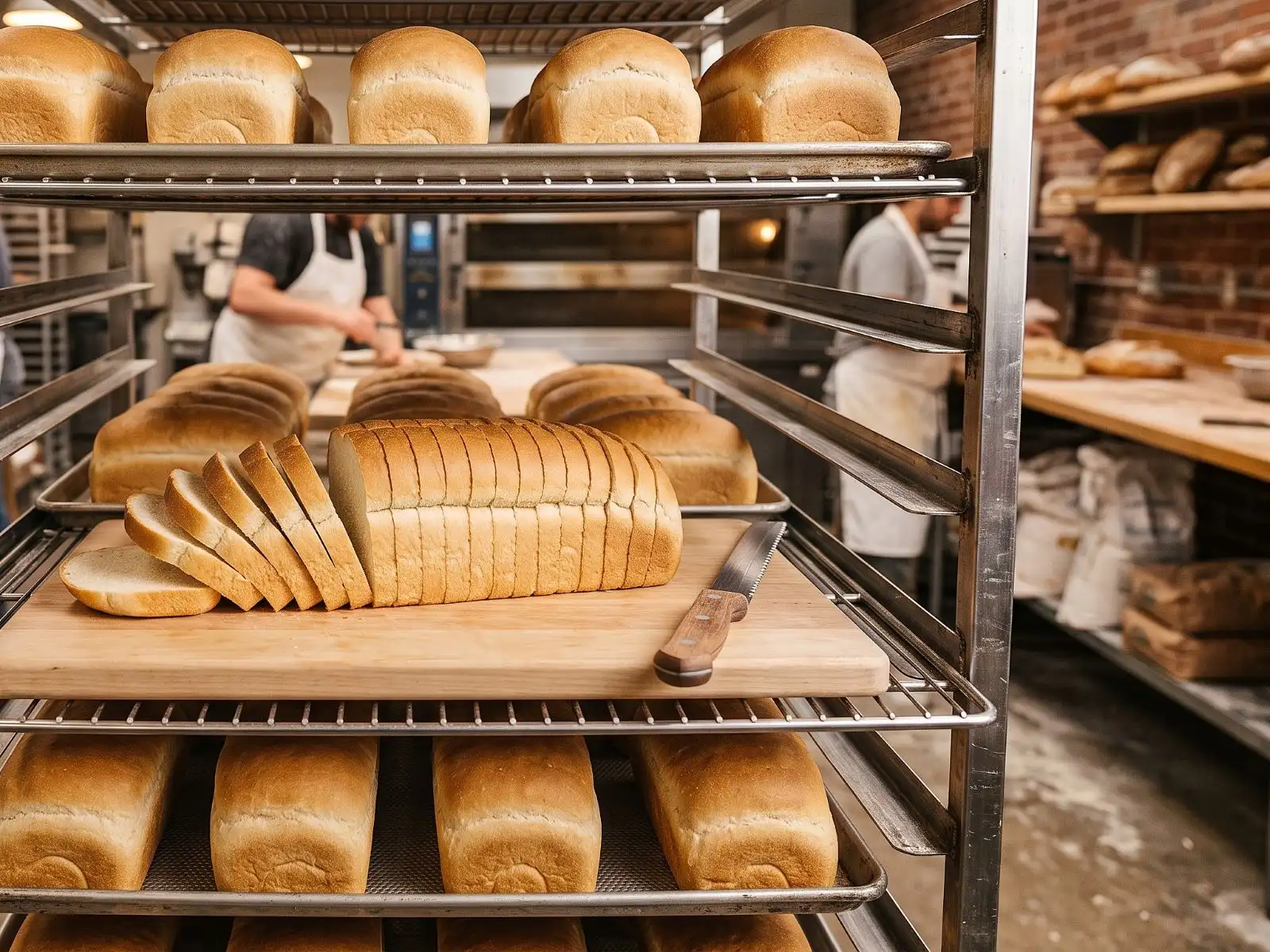
Sliced bread is one of the main applications for encapsulated calcium propionate. Slicing exposes the crumb to contamination, making mold control more demanding when the product must maintain a multi-day ambient shelf life. Controlled release can help address this requirement while limiting the preservative’s exposure during dough fermentation.
Buns and Rolls
Buns and rolls are often distributed through foodservice, retail and export channels, where transit and storage add to the time between production and consumption. For products that need several days of ambient shelf life, encapsulated calcium propionate offers another way to manage mold control without relying solely on higher levels of regular calcium propionate.
Artisan Bread, Hearth Loaves and Sourdough
These products require a more specific assessment. Long fermentation and the organic acids produced during sourdough fermentation can help limit mold growth, while an intact crust protects the crumb before slicing. Whether encapsulated calcium propionate is needed depends on the recipe, packaging, distribution conditions and target shelf life.
Frozen and Retarded Dough
In chilled or frozen dough systems, preservative performance must be considered alongside the holding period, thawing or proofing conditions, and final baking profile. A temperature-sensitive coating can keep the propionate from being released during earlier processing stages and release it during baking, provided the coating remains intact throughout the hold and the baking conditions trigger release.
Tortillas and Flatbreads
Tortillas and flatbreads can be susceptible to mold because of their moisture content, handling and storage conditions. Their processing conditions differ from those of conventional pan bread, so the coating system and release temperature must match the actual production process. Corn tortillas also require attention to the effects of nixtamalisation and formulation on the finished product’s pH.
| Your process | Wall system | Release trigger | Typical applications |
|---|---|---|---|
| Oven-baked leavened dough | Temperature-sensitive lipid | Coating melts during baking | Pan bread, buns and selected flatbreads |
| Dough held frozen or retarded | Temperature-sensitive lipid | Coating melts during baking after the holding stage | Frozen dough and retarded dough operations |
| Dry improver, hydrated later | Moisture-sensitive dextrin | Coating dissolves when water is added | Bakery improvers, bread premixes and dry mixes |
| No relevant release trigger | Not applicable | Neither trigger is activated | Consider regular calcium propionate or reassess the need for encapsulation |
Encapsulated vs Regular Calcium Propionate
The key consideration is not simply the price per kilogram, but how the ingredient performs in the dough and whether it meets the required shelf life target.
| Parameter | Regular calcium propionate | Encapsulated calcium propionate |
|---|---|---|
| Release point | Dissolves during mixing and becomes available in the dough | Released on hydration or when the coating reaches its melting range |
| Dough pH and fermentation | Available during fermentation and can affect dough performance at higher inclusion levels | A suitable temperature-sensitive coating delays release until baking |
| Flavour | Higher inclusion levels can affect the flavour profile | Delayed release can help limit exposure during fermentation |
| Dry premix handling | Can absorb moisture, cake and become harder to dose consistently | The coating separates the active ingredient from the surrounding carrier |
| Dosage considerations | Set according to shelf life needs, fermentation performance and flavour | Set according to active content, release behaviour, shelf life target and applicable limits |
If regular calcium propionate already delivers the required shelf life without affecting dough performance or flavour, encapsulation may not be necessary. It becomes relevant when the target shelf life requires a formulation that regular calcium propionate cannot deliver as effectively under the same processing conditions.
Summary
Calcium propionate remains an established preservative for bread. The practical challenge is balancing mold control with fermentation performance and finished-product flavour. Encapsulation changes when the active ingredient becomes available, giving bakeries another way to manage that balance.
Niran Bio supplies encapsulated calcium propionate and works with partner plants to match coating systems to customer requirements. Buyers evaluating encapsulated calcium propionate suppliers should request the core content specification, coating melting range and release data relevant to their baking process, then assess samples under their own production conditions.
FAQs
Can I replace regular calcium propionate with encapsulated calcium propionate at the same weight?
Not necessarily. Encapsulated products typically contain 60% to 90% calcium propionate, so the required product weight depends on the active content. To maintain the same calcium propionate dose, divide the target amount of calcium propionate by the product’s core content, expressed as a decimal. If the target is expressed as propionic acid rather than calcium propionate, convert the dose to the same basis before calculating.
Which coating material should I use, dextrin or lipid?
Dextrin is suited to dry improvers and premixes that are hydrated during production. Lipid coatings are suited to applications where release needs to be delayed until baking. The choice depends on when the preservative needs to become available in the process.
Is encapsulated calcium propionate suitable for sourdough and long-fermented bread?
These products need to be assessed against their existing shelf life performance. Long fermentation and the organic acids produced during sourdough fermentation can help limit mold growth, but the result also depends on the recipe, packaging and storage conditions. Encapsulated calcium propionate is worth considering when the required shelf life exceeds what the current process can achieve.
Can I use calcium propionate with sorbates in sliced bread?
They can serve complementary preservation roles, depending on the formulation and application method. Calcium propionate is commonly incorporated into the dough, while sorbates may be applied through other methods to help control surface mold. The combination should be evaluated for effectiveness, flavour and compliance with the applicable food regulations.