Encapsulation & Blending Solutions Supplier Since 2003

Pizza crust may look simple, but it gives mold plenty to work with. Once the crust leaves the oven, it is cooled, handled, sliced, and packed, and each step gives mold spores a chance to land on the surface. For manufacturers of par-baked, refrigerated, and frozen pizza bases, the goal is simple to describe but harder to achieve: keep the crust safe, appealing, and stable until the customer bakes it.
Calcium propionate is widely used as a mold inhibitor in bakery products. Encapsulated calcium propionate offers another way to add it to dough. It may suit some production lines better than the standard powder, but the result depends on the grade, the process, and the product type. Below, we explain why pizza crust needs mold control, why encapsulation is worth considering, what to check before choosing a grade, and how to learn more about the product.
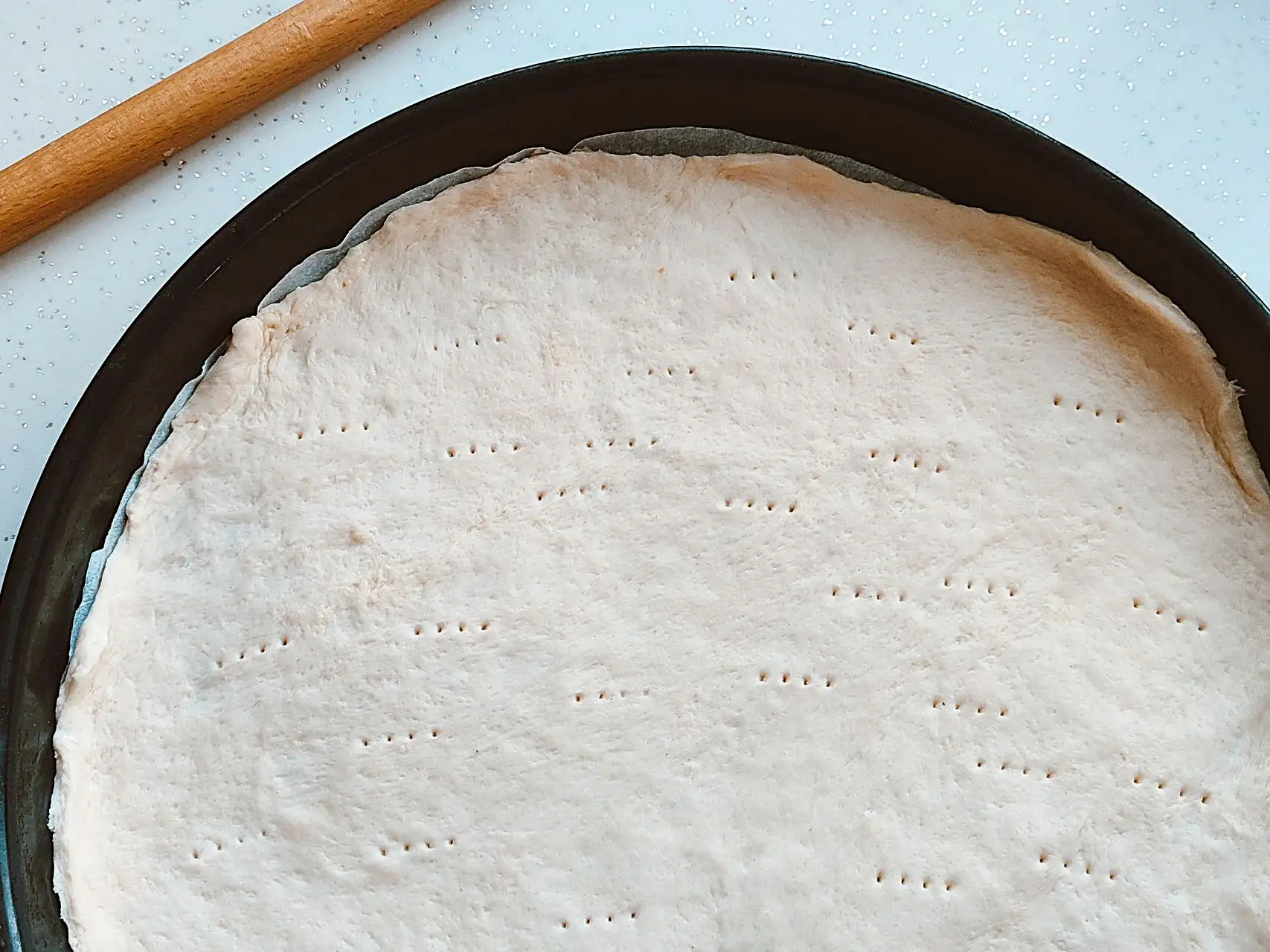
Why Pizza Crust Needs Mold Control
Baking reduces the number of microorganisms in the crust, but it does not make the product sterile. Mold spores are common in factory air, on equipment, and in cooling areas. After baking, the crust is exposed again during cooling, slicing, and packing. Any spores that land on it can grow later, especially during storage.
Pizza crust offers moisture, starch, and nutrients that mold can use easily. Common bread molds such as Penicillium and Rhizopus can appear quickly when conditions are warm and humid. Visible mold ends shelf life, leads to returns and waste, and damages customer trust. Condensation inside a package can make the problem worse.
The risk is not the same for every crust. A par-baked crust may be stored at room temperature for days or weeks, and it is handled after baking. A refrigerated base stays cold, but cold storage slows mold growth without stopping it. A frozen crust largely stops growing mold while it stays frozen, but spoilage can resume after thawing. Each type needs its own plan, as explained in the Applications section below.
Why Consider Encapsulated Calcium Propionate for Pizza Crust
Regular calcium propionate is a powder that goes straight into the dough. It works well in many bakery products, but it has limits. If it does not disperse evenly, some parts of the crust may receive less protection than others. At higher levels, it can also slow yeast activity during fermentation.
Encapsulation holds the active ingredient inside a food-grade carrier or coating. Depending on the system, this may bring several practical advantages:
- More even dispersion. A well-made particle can be easier to mix evenly into the dough.
- Less early contact with yeast. The coating may limit how quickly the preservative reaches the dough during mixing and fermentation.
- More controlled release. Some grades are designed to release the active ingredient later, for example when the dough reaches baking temperature or when moisture is present.
- Easier handling. Encapsulated powders may flow more freely.
These are possible benefits, not guarantees. The actual release profile depends on the carrier, particle structure, moisture, and temperature history. A longer bake, a thicker crust, or a different mixing method can all change how the ingredient behaves. Treat encapsulation as an option to test, not as a shortcut to a longer shelf life. Supplier data and your own trials will show whether it works in your product.
What to Check When Choosing Encapsulated Calcium Propionate
Before comparing prices, check the following points. They show whether a grade is likely to suit your crust and your process.
- Active content. Compare grades by their active calcium propionate content, not by the weight of the powder. For example, if the target is 0.20% active calcium propionate on flour weight, a batch with 100 kg of flour needs 0.20 kg of active material. A standard grade with 85% active content would require about 0.235 kg (0.20 ÷ 0.85). This is only a calculation example. The right use level depends on your formulation, process, and local regulations.
- Carrier and specifications. Ask what the wall material is (lipids, dextrin, emulsifiers, or salts, depending on the grade) and confirm that it is suitable for bakery use. Also compare the core-to-wall ratio, encapsulation efficiency, particle size, and batch-to-batch consistency.
- Release behavior. Ask for data on when and how the active ingredient is released. The word “encapsulated” alone does not prove release during baking or a longer shelf life.
- Process and dough fit. Test the grade through mixing, forming, baking, cooling, and packaging. Dough pH and moisture affect how well calcium propionate works, and thin and thick crusts can behave differently in the oven.
- Regulations. Permitted uses, maximum levels, and labeling requirements vary by country and product category. Confirm the rules for your target market before you finalize the formulation.
- Trial design. Compare the encapsulated grade side by side with your current preservative system or a control, keeping everything else the same. Use a shelf-life study that matches how the product will be sold, and use documented microbiological testing rather than visual checks alone.
Applications in Pizza Crust Production
Different pizza products may require different ingredient-selection and validation approaches.
Par-baked pizza crust
Par-baked crusts are partially baked before cooling, packaging, distribution, and final baking. Because the crust is handled after it leaves the oven, the post-bake stages deserve close attention.
Manufacturers should evaluate the preservative system under the actual production process, including the cooling and packaging stages where post-baking contamination may occur.
Refrigerated pizza bases
Refrigerated products require consideration of both the preservative system and the intended cold-storage conditions. Temperature control, packaging, and expected storage duration should be included in shelf-life evaluation. Cold storage slows mold growth, but it does not stop it entirely, so the preservative system still matters.
Frozen pizza crust
Freezing dramatically slows microbial growth, but it does not sterilize the crust, and spoilage can start again after thawing. The need for a preservative depends on the formulation, intended storage period, thawing instructions, and conditions after thawing. Encapsulation is not automatically necessary for every frozen pizza application.
For each product type, manufacturers should determine whether encapsulated calcium propionate offers a practical advantage over their current preservation system. A side-by-side trial is the most direct way to find out.
How to Learn More About Encapsulated Calcium Propionate
If you are looking for an encapsulated calcium propionate supplier for pizza crust, start with the product page. To get a more specific recommendation, share the following details:
- Pizza crust type (par-baked, refrigerated, or frozen) and crust thickness
- Current formulation and preservative system
- Process details, including mixing, baking time and temperature, cooling, and packaging
- Target shelf life, storage temperature, and distribution route
- Target market and labeling requirements
Niran Bio can provide product specifications, technical guidance, and samples for testing. The standard grade contains 85% active calcium propionate, and the wall material, particle size, and release profile can be adjusted to fit your process. Certificates are available on request, and the product is typically made in facilities that comply with ISO, HACCP, FSSC 22000, BRCGS, Halal, and Kosher standards.
FAQs
Can encapsulated calcium propionate extend the shelf life of par-baked pizza crust?
It can be evaluated for par-baked crust, but the result depends on your formulation, packaging, storage conditions, and contamination risk. A shelf-life trial is needed to show the actual benefit.
Is encapsulated calcium propionate better than regular calcium propionate?
Not automatically. Encapsulation can change how the ingredient disperses, how it interacts with yeast, and when it is released. Whether that is an advantage depends on your product and process.
Do frozen pizza crusts need a mold inhibitor?
Not always. The answer depends on the storage period, thawing instructions, and conditions after thawing. Freezing lowers the risk of spoilage, but it does not remove it.
Is calcium propionate permitted in pizza crust?
It depends on the country and the product category. Check the permitted uses, maximum levels, and labeling rules for your target market before you use it.