Encapsulation & Blending Solutions Supplier Since 2003

In commercial sliced bread, calcium propionate is the standard antifungal preservative for baseline shelf-life cycles. However, extending ambient distribution past 14 to 21 days pushes propionate beyond its functional and sensory limits. At the elevated dosages required for extended mold inhibition (>0.3% to 0.4% flour basis), it introduces a distinct chemical off-odor and lingering bitterness. In addition, its efficacy depends strictly on undissociated acid (pKa 4.88), causing antimicrobial activity to drop sharply as finished crumb pH approaches 5.5 to 6.0.
Sorbic acid exhibits a significantly lower minimum inhibitory concentration (MIC) against common spoilage molds (such as Penicillium and Aspergillus) and maintains a neutral sensory profile. However, free sorbic acid cannot be incorporated directly during dough mixing because it halts yeast metabolic activity, arresting fermentation and collapsing loaf volume.
Encapsulated Sorbic Acid resolves this incompatibility. By coating the active acid in a food-grade lipid shell, the preservative remains isolated from yeast during mixing and proofing, releasing into the crumb matrix only after oven temperatures exceed the thermal death point of yeast.
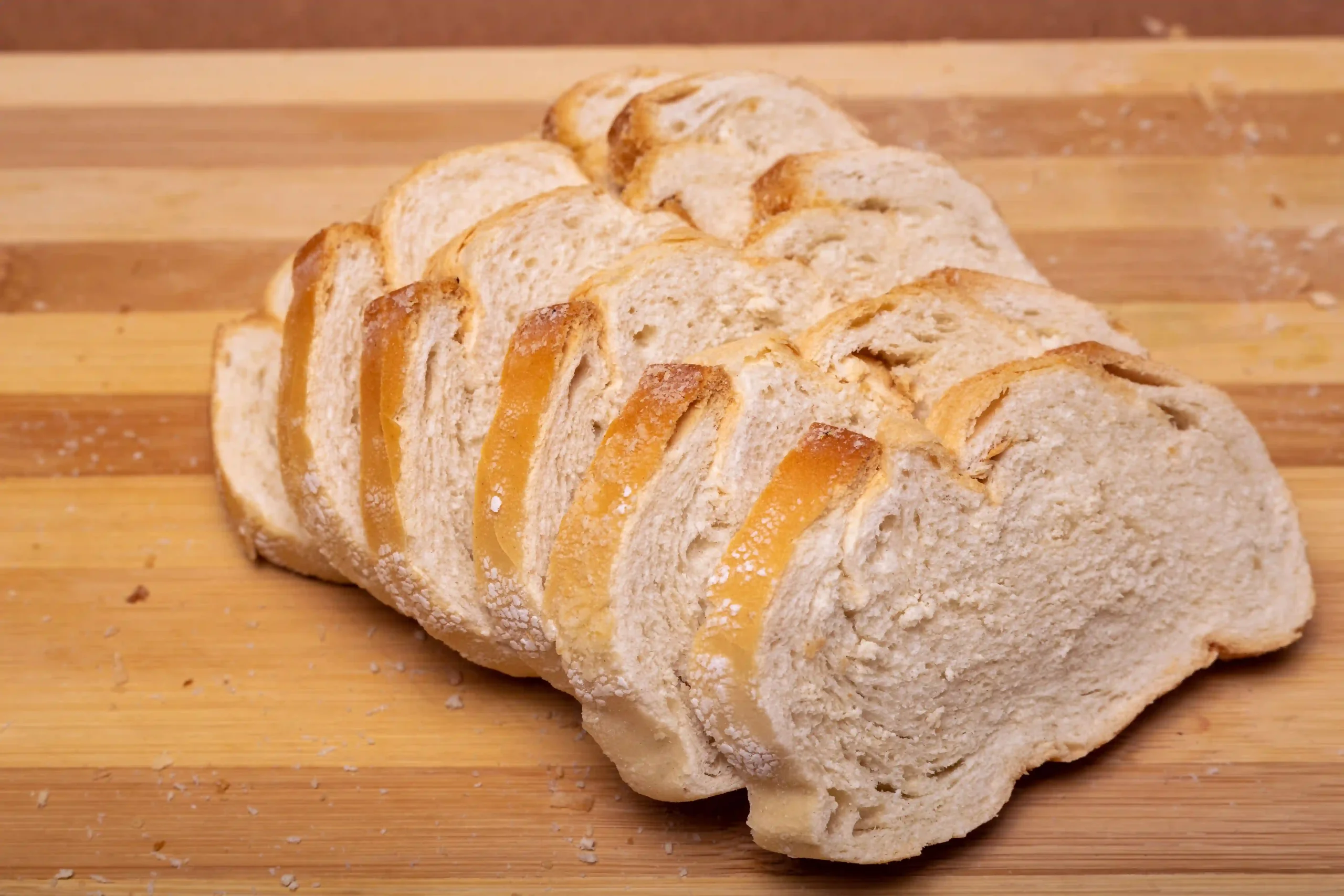
Limitations of Calcium Propionate in Extended Shelf-Life Loaves
- Sensory Thresholds: Dosages sufficient to deliver 21+ days of mold-free shelf life routinely exceed the sensory rejection threshold for commercial white and sandwich loaves.
- pH-Driven Inactivation: Enriched formulations, brioche, and milk breads typically finish at higher pH values (5.5–6.0). In this range, the active, undissociated fraction of propionic acid decreases substantially, requiring uneconomical dosages to maintain inhibition.
- Lower Intrinsic Efficacy: Propionate is primarily a fungistat with moderate potency. Sorbic acid provides three to four times higher antifungal activity at equivalent molar concentrations.
Process Mechanism: Thermal Release Kinetics
Encapsulated sorbic acid replaces both high-dose propionate formulations and post-bake topical potassium sorbate sprays through temperature-controlled release:
- Proofing Stability: The vegetable lipid coating remains solid throughout mixing and proofing temperatures (35°C–38°C). Fermentation rate, proof times, and oven spring match unpreserved control doughs.
- Oven Phase Release: The lipid shell is calibrated to melt between 60°C and 65°C. Because yeast cells inactivate around 55°C, the acid releases without impacting fermentation, dispersing evenly through the gelatinizing crumb matrix before crumb set.
- Full-Slice Coverage: Unlike topical potassium sorbate sprays, which require dedicated aerosol equipment and leave internal slice faces vulnerable after slicing, encapsulated sorbic acid provides uniform internal and external antifungal protection.
Formulation & Processing Parameters
- Active Payload: Standard commercial grades contain 70% to 85% active sorbic acid by weight. Replacement calculations must be based on active acid mass rather than gross ingredient weight.
- Shear Tolerance: Formulations produced on high-speed industrial mixers should be evaluated to verify that mechanical shear does not fracture the lipid coating prior to dividing and proofing.
- Dosage Calibration: Due to the lower MIC of sorbic acid, equivalent or extended mold-free shelf life can typically be achieved with a lower net active loading than calcium propionate, removing preservative-related off-flavors.
Commercial Supply & Specifications
Niranbio supplies food-grade Encapsulated Sorbic Acid designed for industrial sliced bread and high-speed baking lines. Technical data sheets, certificates of analysis, and sample quantities for pilot trials are available on request.
Contact Niranbio to request technical specifications or pilot samples for bakery formulations.
FAQs
Does high-speed mixing damage the lipid encapsulation?
Commercial grades use hydrogenated vegetable fats engineered to resist standard spiral and high-speed horizontal mixers. However, excessive mixing times or dough temperatures exceeding 32°C during friction build-up should be monitored to prevent mechanical or thermal rupture.
How does crumb pH affect encapsulated sorbic acid compared to calcium propionate?
With a pKa of 4.76, sorbic acid remains functional across a broader operational range than propionate (pKa 4.88) due to its significantly lower minimum inhibitory concentration, maintaining practical antifungal activity in higher-pH enriched breads.
Can encapsulated sorbic acid fully replace calcium propionate?
Yes. It can completely replace calcium propionate to eliminate sensory defects in extended-shelf-life goods, or be used in hybrid systems to lower overall preservative costs while staying below sensory detection limits.
How does this compare to post-bake surface spraying?
Surface spraying protects only the outer crust and creates plant aerosol exposure. Once the loaf is sliced, internal slice faces remain exposed to airborne spores during bagging. Encapsulation distributes the preservative throughout the entire crumb.