Encapsulation & Blending Solutions Since 2003

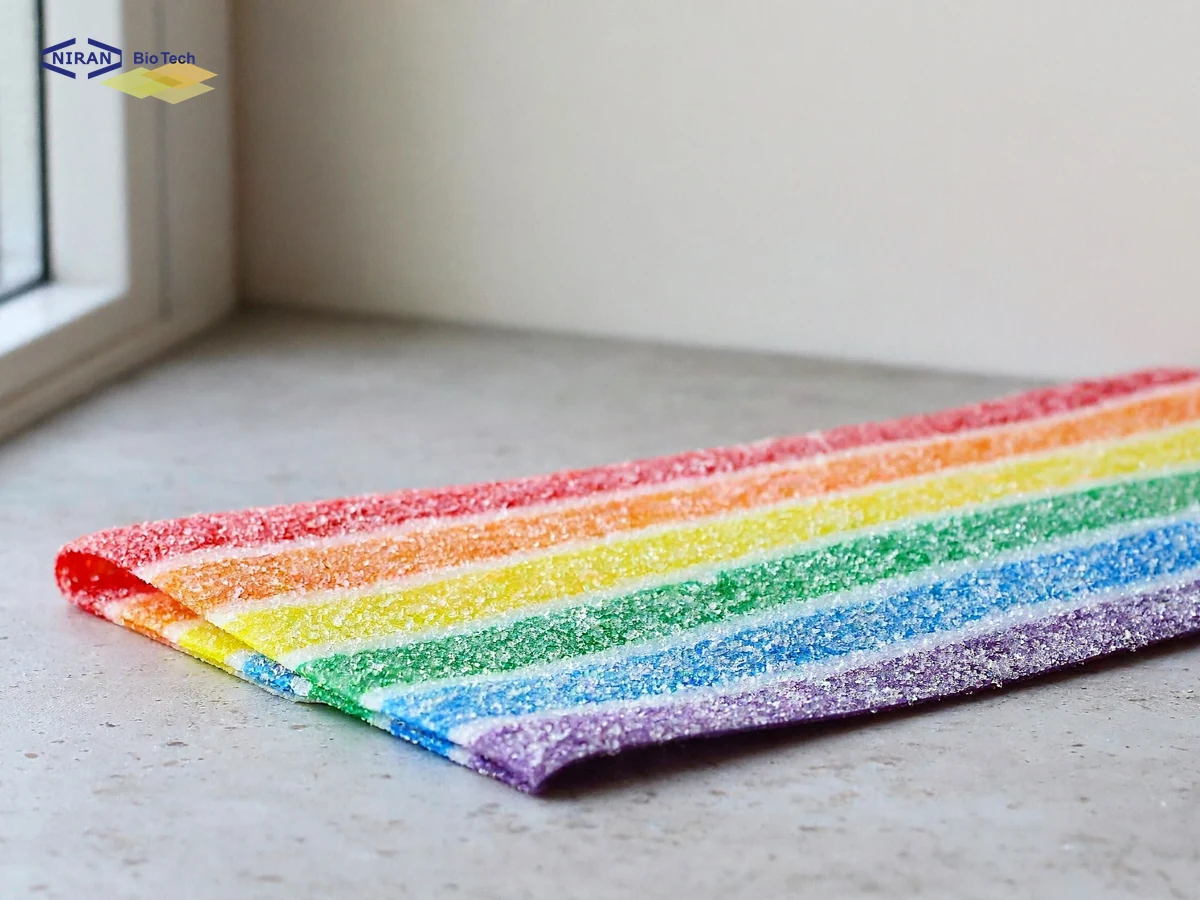
Sour belts look simple: an extruded ribbon, cut to length, then coated with acid sanding. The geometry makes them one of the harder sour formats to keep dry through storage. A flat strip carries a large coated surface per gram, and much of that surface later sits against air, packaging film, or another belt.
This guide covers where acid migration starts on extruded belts and strips, what it does to the surface and the chew, and how encapsulated acids can help.
Why Sour Belts Are Prone to Acid Migration
Sour belts candy is typically extruded as a continuous ribbon or rope, then cut and sanded. The sanding is usually a dry blend of malic acid, citric acid, or both, mixed with sugar or dextrose and applied after forming. Both acids are water-soluble and hygroscopic, so the coating takes up moisture as soon as ambient humidity rises.
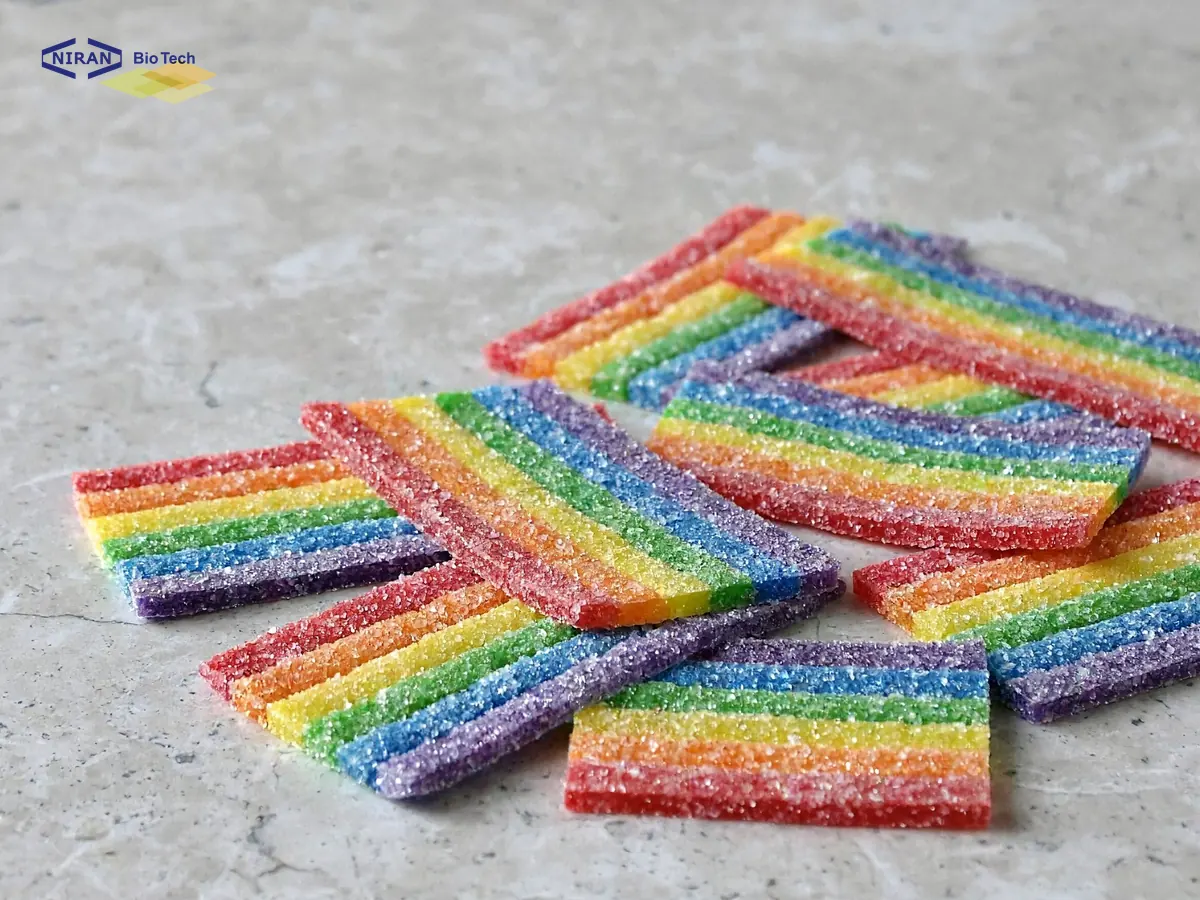
The belt format makes that uptake harder to manage than on a thicker, deposited piece. Each gram carries more exposed coating. Cut pieces often lie face to face in packs, so a sanded surface contacts the next belt and dissolved acid can transfer. Acid can also spread along the large face, or move down into the chewy body, especially when temperature and humidity cycle in distribution.
What Acid Migration Does to Surface and Texture
Once the coating takes up moisture, several defects tend to appear together. Damp acid and sugar crystals fuse into a film, and belts start sticking to each other and to the packaging film. Acid leaving the surface dulls the first sour hit, while acid that has moved into the body can soften the chew and make parts of the interior more acidic than intended. Wet or crusted patches also make the sanding look uneven.
Flavor balance can move as well. Citric acid gives a sharp, immediate onset. Malic acid is smoother and more lingering. In an unencapsulated blend, the two acids can absorb moisture at different rates, so the effective ratio can drift during storage.
Why Anti-Caking and Packaging Alone Often Fall Short
Anti-caking agents such as tricalcium phosphate or silicon dioxide improve flow and reduce clumping in the sanding blend. They do not stop the acid from taking up moisture once it is on the candy surface. Lowering acid loading or changing the sugar-to-acid ratio can reduce severity, but that also trades away sour impact and still leaves the acid unprotected.
The same moisture mechanism is discussed for deposited pieces in the sour gummy moisture problem article. Sour belts differ mainly in geometry: more coating is exposed per gram, and packed pieces share large, flat contact faces. Packaging still matters. Encapsulation complements the film and storage conditions; it does not replace them.
How Encapsulated Acids Help on Extruded Belts
Encapsulated acids place a moisture-barrier shell around each acid particle, which helps delay premature dissolution on the belt surface. Regular citric and malic acids dissolve readily on contact with moisture. Encapsulation helps hold that release back, which can reduce surface dampness and stickiness and help the sanding stay drier in storage.
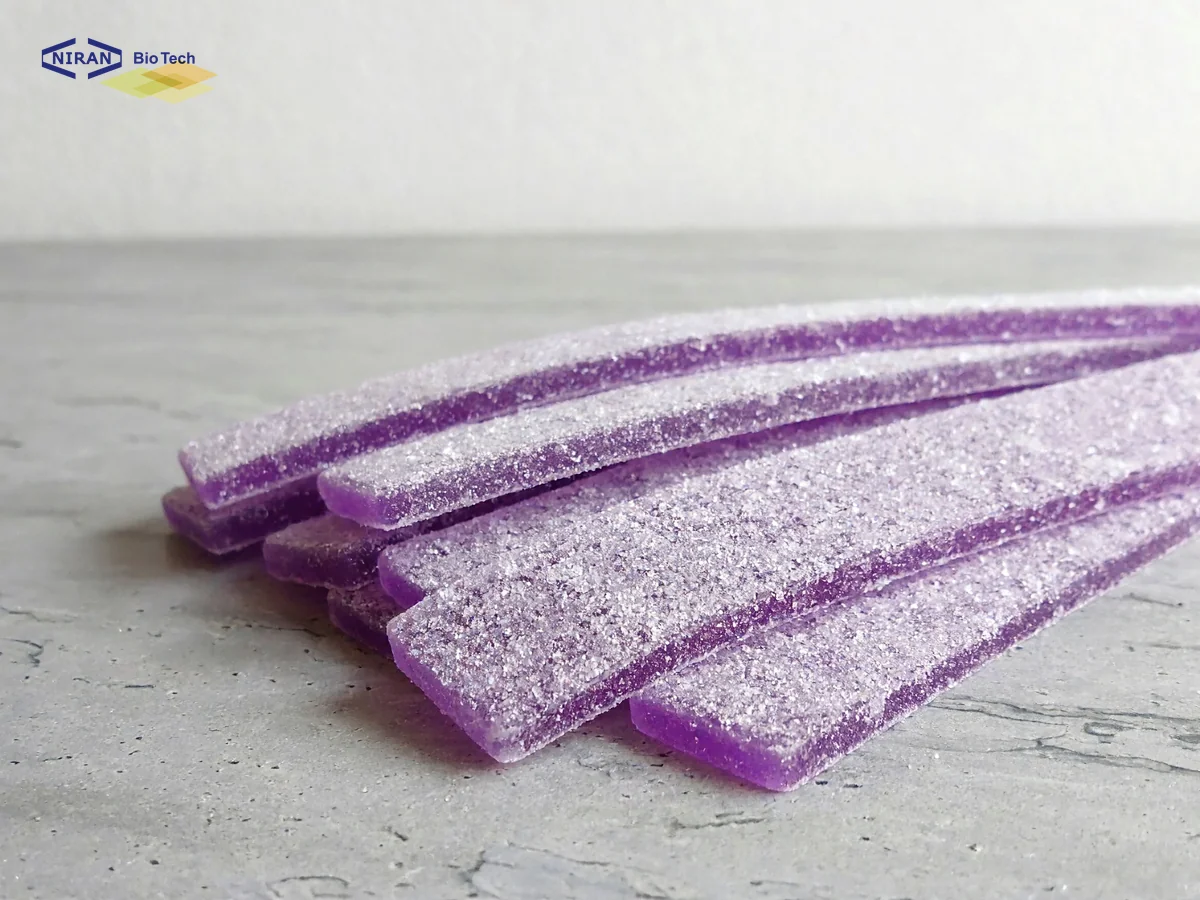
Encapsulated citric acid and encapsulated malic acid are both available in moisture-triggered and heat-triggered systems. Moisture-triggered grades become available when moisture reaches the particle: citric acid with sodium citrate, or malic acid co-crystallized with sodium malate. Heat-triggered grades use a hydrogenated vegetable oil coating that forms a hydrophobic barrier and typically melts at 135-165°F / 57-74°C, a range that can be customized. If a heat-triggered grade is used in sanding, keep sanding and any later warm step below that melt range.
| Aspect | Standard acid sanding | Encapsulated acid sanding |
|---|---|---|
| Moisture at the surface | Acid dissolves on contact | Shell delays premature dissolution |
| Surface tack in storage | Rises as the coating dampens | Surface can stay drier |
| Belt-to-belt contact | Damp faces tend to stick | Less stickiness expected when the shell stays intact |
| Sour profile during storage | Ratio can drift as moisture uptake differs | Better ratio stability when both acids are encapsulated |
Building a Sour Profile on Sour Belts
A blend of the two encapsulated acids can hold a layered sour profile, with citric acid for sharp onset and malic acid for a longer finish, because both particles are protected. Sourness can then be adjusted through the ratio of the two acids, not only by raising total acid loading. Release takes place in the mouth: saliva supplies the water that dissolves or breaks the shell, so the acid is delivered at consumption rather than on the belt surface.
For sour belts intended for longer distribution, compare a standard sanding and an encapsulated sanding on the same base candy, under humidity and temperature conditions that represent the supply chain. Check surface tack, sour impact, and texture together. Niranbio Tech supplies both encapsulated acids; full grade details are on the product pages, and line trials remain the right check before scale-up.
FAQs
Why does acid migrate more readily on sour belts than on many gummies?
Sour belts have a high surface-area-to-volume ratio and large, flat contact faces in packing. More acid coating is exposed per gram, and sanded faces can transfer moisture and dissolved acid to neighboring pieces.
Can anti-caking agents replace encapsulation on sour belts candy?
No. Anti-caking agents such as tricalcium phosphate or silicon dioxide improve flow, but they do not stop the acid from absorbing moisture at the candy surface.
What is the difference between moisture-triggered and heat-triggered encapsulated acids?
Moisture-triggered systems release acid when moisture contacts the particle. Heat-triggered systems use a hydrogenated vegetable oil coating that typically melts at 135-165°F / 57-74°C. Select the system from the process, then confirm it in trials.
Do encapsulated acids make packaging controls unnecessary?
No. Encapsulation complements packaging and storage. Film, sealing, and distribution still determine the moisture load on the product.