Encapsulation & Blending Solutions Since 2003

A monk fruit allulose blend pairs allulose as the bulk sweetener with monk fruit extract (mogrosides) for high-intensity sweetness. Sweetness is typically customizable from 0.7x to 1.5x relative to sucrose, including 1:1 replacement in many applications. Reaching the target sweetness is the easy part of a reduced-sugar reformulation. The harder part is what sugar quietly does once heat and water are involved: it browns, it holds moisture, and it gives a piece its body. This article looks at how the blend behaves on those three functions, and where it needs help.
Why a Monk Fruit Allulose Blend Pairs Bulk With Intensity
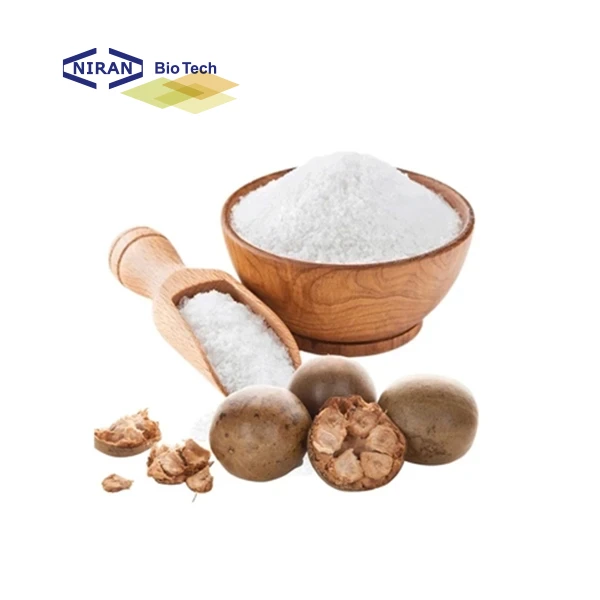
The two components solve different problems. Monk fruit extract is a natural high-intensity sweetener from Siraitia grosvenorii, and its sweetness comes from mogrosides. It is used at low levels, so it adds almost no solids. On its own it cannot replace sugar’s bulk, browning, or humectancy. Formulators who need the standalone ingredient can source monk fruit extract directly.
Allulose supplies what the extract cannot. It is a low-calorie rare sugar, a monosaccharide structurally similar to fructose, with approximately 70% of the sweetness of sucrose. It brings solids, a sugar-like taste, and the ability to take part in Maillard reactions. Allulose (D-psicose) is also available as a stand-alone regular ingredient when a formula needs to be built from separate components.
Compared with erythritol-based systems, allulose generally gives a more sugar-like mouthfeel with little or no cooling effect. That is the practical reason to choose it where cooling would clash with the flavor profile. If cooling is acceptable and browning is not required, the monk fruit erythritol blend is the natural comparison. For the broader logic of why blends can taste closer to sugar than a single sweetener, see Why Do Sweetener Blends Taste More Like Sugar?; this article stays on functional behavior.
| Function | Allulose contribution | Monk fruit contribution |
|---|---|---|
| Sweetness | Moderate, sugar-like | High intensity, low use level |
| Bulk and solids | Yes | Negligible |
| Maillard browning | Participates | Does not contribute |
| Moisture retention | Supports during heat | Does not contribute |
| Chew and body | Main driver | Does not contribute |
Browning and Moisture Retention in Heat-Processed Systems
Erythritol and most high-intensity sweeteners do not brown. Allulose does. As a reducing monosaccharide it takes part in Maillard reactions, so cookies, bars, glazes, and sauces can develop color and a cooked flavor that polyol-only systems often lack. Caramel and toffee notes are one example; baked crusts and pan sauces are others.
Two practical consequences follow:
- Color can develop faster than in a sucrose control. Bake or cook profiles that were tuned for sugar may need adjustment, and the Golden grade of the blend starts with a light brown tone before any heat is applied.
- Moisture retention during thermal processing is a benefit for softness and shelf feel, but the same property can push a finished piece toward stickiness if the formula is not rebalanced.
Treat browning and moisture as linked variables. A bakery item that holds more water may also brown differently, and a cooked confection may need a changed endpoint to reach the intended texture. Establish the response on the bench first, then confirm it in pilot trials rather than carrying over sucrose process settings.
Chew and Body in Residual-Moisture Confectionery
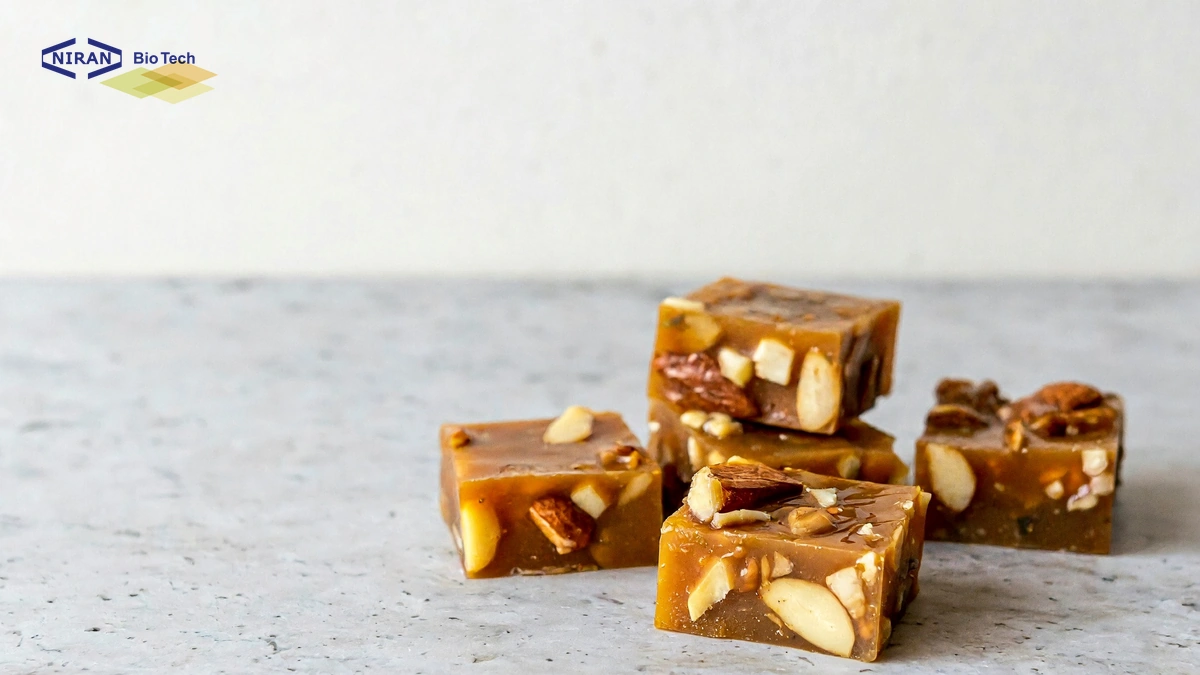
Body is where bulk sweeteners earn their place. Because allulose contributes real solids and holds water, a monk fruit allulose blend can support the soft, short chew expected of caramel-style pieces, soft candies, and bars. Residual-moisture chews, such as those in sour chewy candy, are a useful reference for the texture type where this behavior matters most.
One caution applies to the opposite texture. Allulose is hygroscopic, and in a clear hard-candy glass it often works against the result, producing pieces that turn sticky or dull. For that format, see Sugar-Free Hard Candy rather than adapting a chew formula.
In chewy systems, the blend is rarely the only lever. Hydrocolloids, fats, and the cooking endpoint all shape final firmness, and the sweetener sets the baseline that those levers adjust.
How to Calibrate a Monk Fruit Allulose Blend
The 0.7x to 1.5x sweetness range and the 1:1 replacement possibility in many applications are starting points, not guarantees. The blend is not automatically a weight-for-weight sucrose replacement in every formula. Because solids, browning, and water activity all shift when sugar is removed, calibrate them together:
- Match sweetness first, using the grade and ratio that fit the target.
- Check solids and body against the sucrose control.
- Compare color development and moisture behavior after processing.
- Confirm water activity and texture over storage in your own conditions.
Regulatory status for allulose is market-specific and must be confirmed in the target market. On the live product page, allulose is noted as not currently approved as a novel food ingredient in the EU. If a formula needs the same allulose bulk with a different high-intensity component, the stevia allulose blend is the parallel option.
Niranbio Tech supplies the monk fruit allulose blend in standard and customized grades, and line trials remain the most reliable check before scale-up. Regular unencapsulated allulose and monk fruit extract are supplied on the main Niran Bio site.
FAQs
Does a monk fruit allulose blend brown like sugar?
It browns because allulose participates in Maillard reactions, which erythritol-only and intensity-only systems do not. The rate and shade differ from sucrose, so thermal profiles need to be verified on the bench.
Can I replace sugar 1:1 by weight?
Often in many applications, since sweetness is customizable from 0.7x to 1.5x relative to sucrose. It is not a universal rule, and solids, browning, and water activity should be calibrated together through bench and pilot trials.
Does the blend taste cooling?
Allulose generally gives a sugar-like mouthfeel with little or no cooling effect, unlike erythritol-based systems.
Is it suitable for clear hard candy?
Usually not. Allulose is hygroscopic and tends to work against a clear glass, so it is better matched to chewy and soft textures.