Encapsulation & Blending Solutions Since 2003

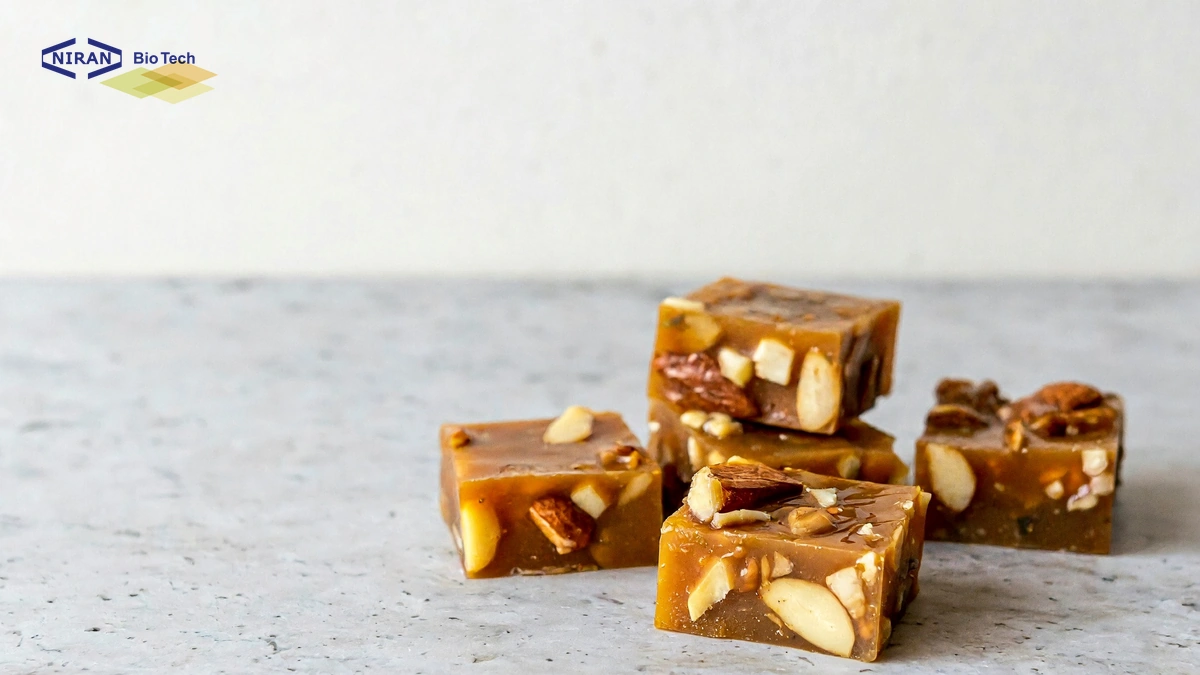
A sour chewy candy has to deliver a clean sour hit from a mass that still holds water, fat, and often milk solids or fruit puree. Taffy, fruit chews, and other plastic cooked-sugar chews are not deposited gummy gels (see the sour gummy moisture problem article) and not low-moisture hard-candy glass. That residual moisture is why free acid behaves differently here.
Why Sour Chewy Candy Handles Acid Differently
A chew is a plastic, residual-moisture system: typically cooked sugar with fat, and sometimes milk solids, gelatin, starch, or fruit puree. Water remains after cooking, and it is mobile enough to dissolve unprotected acid. Regular citric or malic acid dissolves readily on contact with moisture, so free acid can start working during mixing, holding, or storage. The chew can lose body, the surface can turn tacky, and residual sucrose can invert. Cooked-sugar inversion is covered in the sour hard candy article and is only flagged here.
Acid in the mass gives sourness from the first bite, but it carries the highest risk of softening and inversion. Surface sanding gives an immediate sour hit, yet on a chew it sits against a body that still holds moisture and fat. That moisture can wet the sanding, so free acid dissolves early, dampens the surface, and migrates inward. Packing geometry on extruded ribbons is a separate problem, addressed in sour belts and extruded sour candy. Many formulators use both locations, and each needs its own acid form.
Matching Acid Form in Sour Chewy Candy
Regular acid is often still the right choice where moisture exposure is brief or the acid is added at the last moment. The forms used most often at large scale are DL-malic acid and citric acid anhydrous. Anhydrous citric is preferred in dry blends because it contains no water of crystallization. When residual moisture is the issue, encapsulation changes the timing of release.
| Application point | Regular acid | Encapsulated grade | Caution |
|---|---|---|---|
| In the chewy mass | Dissolves early; softening and tack risk | Heat-triggered citric or malic (HVO coating) | Add only below the coating melt range |
| Surface sanding | Wets from body moisture; migrates inward | Moisture-triggered citric or malic, or heat-triggered if kept cool | Keep any later warm step below the melt range |
| Mild or dairy-leaning chew | Free lactic acid can soften the body | Encapsulated lactic acid, evaluated case by case | Not a drop-in for citric or malic sanding acids |
For acid inside the mass, start with a heat-triggered grade. Encapsulated Citric Acid and Encapsulated Malic Acid are both offered with an oil-type hydrogenated vegetable oil (HVO) coating, the default oil-type wall. The heat-triggered citric grade is 90 ± 2% citric acid and 10 ± 2% edible oil (20-60 mesh, 80% passing). The heat-triggered malic grade (NBT-8502) is 90 ± 2% malic acid and 10 ± 2% edible oil (25-60 mesh, 90% passing). The typical melt range for both is 135-165°F / 57-74°C, and it can be customized. Add the grade late, once the mass is below that range and close to forming. If the mass is still at or above the range, the coating can melt and release the acid early. Confirm workability on the line, and keep any sanding or later warm step below the same melt range.
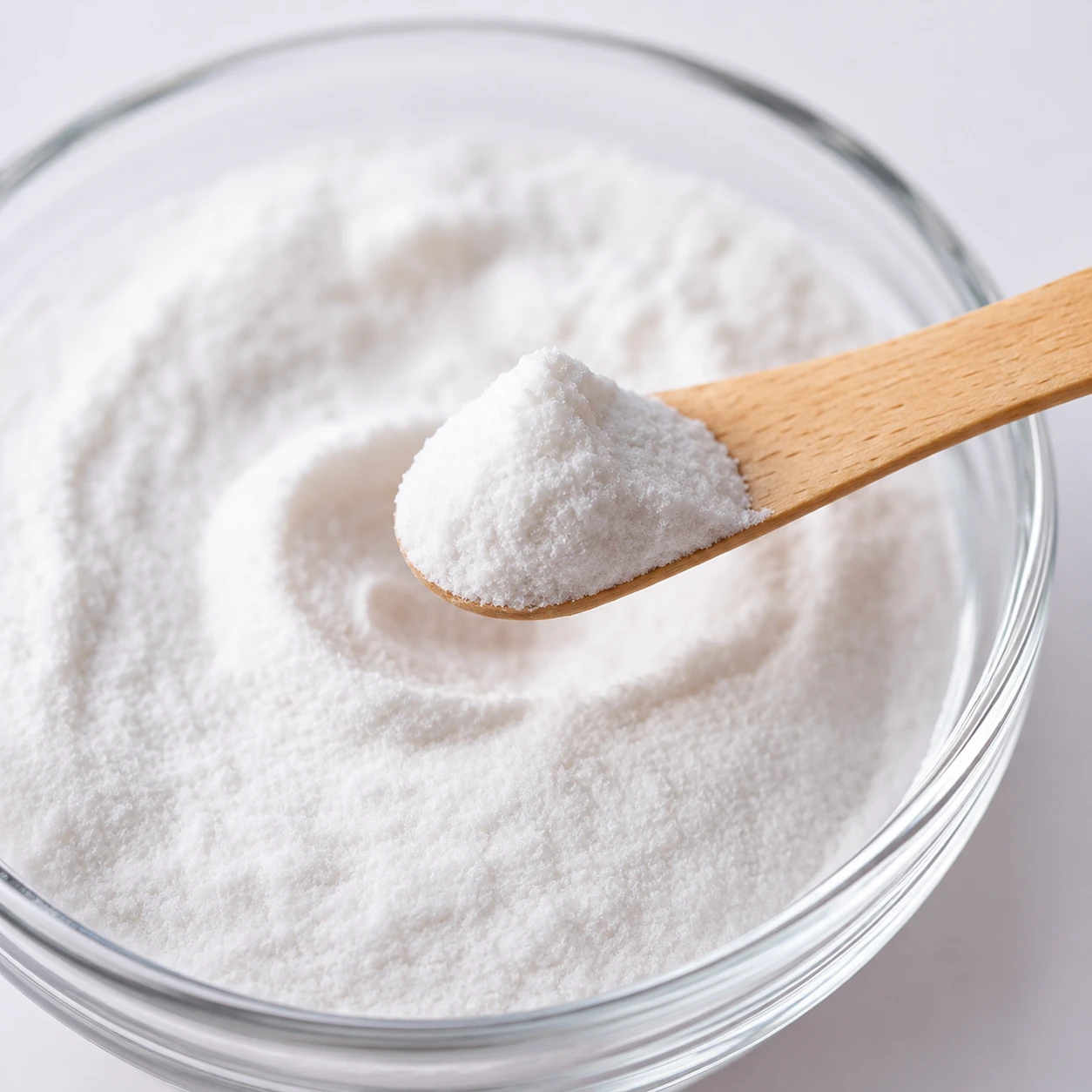
Surface application is where moisture-triggered grades fit most naturally. They are water-soluble, co-crystallized systems that become available on contact with moisture, including saliva during chewing. Co-crystallization is a process, not a third wall material; in confectionery it is used along with embedding and fusion. The moisture-triggered citric grade is citric acid 97% minimum with 1.5% to 3.5% sodium citrate, 30-80 mesh with 85% passing. The moisture-triggered malic grade (NBT-8502MN) is 75 ± 3% malic acid and 25 ± 3% sodium malate, 25-60 mesh with 85% passing. Do not assume these grades survive a hot cook or a wet mass intact.
A citric-plus-malic blend is a standard way to get a sharp onset and a longer finish; see malic acid vs citric acid. For a dairy or caramel-leaning chew, Encapsulated Lactic Acid (MF-4505) is a milder heat-triggered option: 45 ± 3% lactic acid with calcium lactate, coated in fully hydrogenated palm or sunflower oil, 20-80 mesh with 95% passing. It is designed primarily for meat processing and can be evaluated in selected confectionery formulas, but it is not a drop-in sanding acid. A sugar-free chew adds bulk-sweetener variables, covered in sugar-free sour candy.
What Encapsulation Can and Cannot Do
In sour chewy candy, encapsulation helps delay premature dissolution, reduce surface dampness and stickiness, and regulate when sourness develops. It does not remove the need to manage residual moisture, fat migration, or storage. Actual performance still depends on formulation, packaging, and storage, and acid content, particle size, and release characteristics can be customized.
Niranbio Tech supplies encapsulated citric acid, encapsulated malic acid, and encapsulated lactic acid in standard and customized grades. Regular grades of the unencapsulated acids are supplied on the main Niran Bio site. Line trials remain the most reliable check before scale-up.
FAQs
Why does a sour chew go soft after acid is added?
Free citric or malic acid dissolves in the residual moisture of the mass and can soften it, make the surface tacky, and invert residual sucrose. A heat-triggered encapsulated grade, added below its melt range, holds the acid back until the piece is chewed, provided later warm steps also stay below that range.
When should heat-triggered acid be added to a fruit chew?
Late, once the mass is below the coating melt range (typically 135-165°F / 57-74°C) and close to forming. At or above that range, the coating can melt and release the acid early. Confirm workability on the line.
Can moisture-triggered acid go inside the chew?
It is generally better suited to surface application, because it becomes available on contact with moisture. Do not assume it survives a hot cook or a wet mass intact.