Encapsulation & Blending Solutions Since 2003

Acid defines sour hard candy more through timing than through chemistry. A cooked sucrose mass runs hot, and free acid in the cook, or later on the surface, acts on the sugar and on ambient moisture before the piece is wrapped. Encapsulated acids move that activity to the moment you choose.
Why Sour Hard Candy Fails When Free Acid Reaches the Mass
Regular citric or malic acid dissolves readily on contact with moisture. Sanded onto a finished piece, it draws water to the surface and the candy turns damp and sticky in the bag. In the cooked mass, free acid promotes sugar inversion, the acid-catalyzed hydrolysis of sucrose into glucose and fructose. Those inverted sugars are more hygroscopic than sucrose, so the glass holds moisture, the surface can dull, and the piece is more likely to grain. Keep free acid out of the hot mass and off the surface until the structure is set.
Cook Temperature and Addition Point in Sour Hard Candy
Heat-triggered encapsulated citric and malic acids use an oil-type hydrogenated vegetable oil coating that typically melts at 135-165°F / 57-74°C, a range that can be customized. Hard candy cooking commonly runs hotter than that standard melt range, so a heat-triggered citric or malic grade added to a mass already at or above the melt range will release early and return you to the free-acid problem. Set the addition point against measured line temperatures at that step, not a generic cook description.
For in-mass addition, add the acid late, once the mass is below the coating melt range and close to forming. Confirm workability on the line. Surface sanding sidesteps the cook: the piece is formed and cooled, then the powder is applied. If a heat-triggered grade goes into sanding, keep that step and any later warm step below the melt range. Moisture-triggered grades release on moisture contact, including saliva, and often fit surface application better. Do not assume they survive a high-solids cook intact. Verify it.
Choosing an Encapsulation System for Sour Hard Candy
Systems divide by solubility into oil-type, hydrophobic coatings and water-soluble, hydrophilic ones. Hydrogenated vegetable oil (HVO) is the default oil-type coating. Co-crystallization is a process, not a third wall material; confectionery uses co-crystallization, along with embedding and fusion.
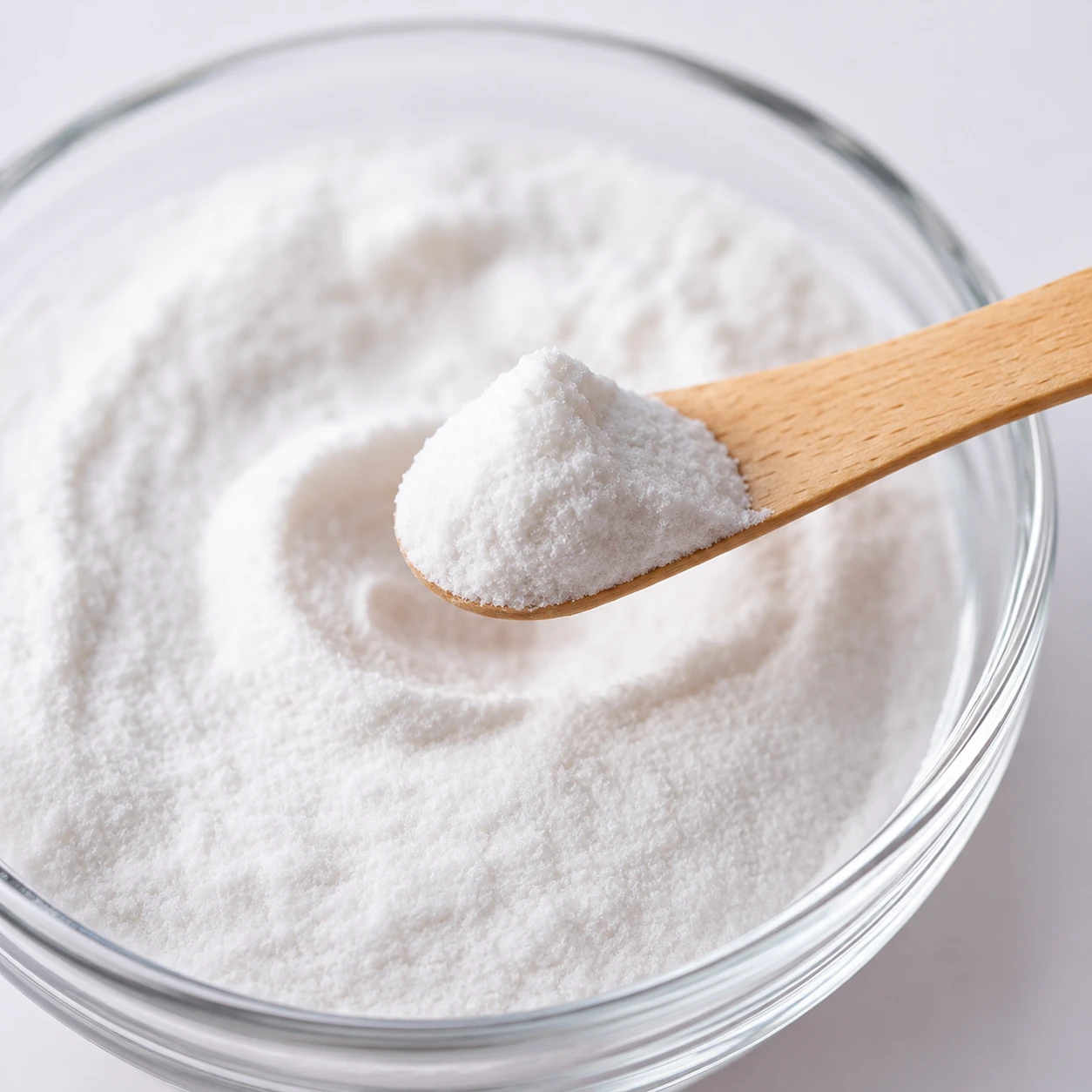
The moisture-triggered citric grade is a water-soluble system made by co-crystallization with sodium citrate: citric acid 97% minimum, sodium citrate 1.5% to 3.5%, 30-80 mesh with 85% passing. The moisture-triggered malic grade is co-crystallized with sodium malate: malic acid 75 ± 3%, sodium malate 25 ± 3%, 25-60 mesh with 85% passing. Both become available on contact with moisture. Heat-triggered citric carries citric acid 90 ± 2% and edible oil 10 ± 2% at 20-60 mesh, 80% passing; heat-triggered malic carries malic acid 90 ± 2% and edible oil 10 ± 2% at 25-60 mesh, 90% passing. Both use an HVO coating that typically melts at 135-165°F / 57-74°C, and the range can be customized.
| Application point | Regular acid | Encapsulated grade | Caution |
|---|---|---|---|
| In mass, early | Inversion and graining | Coating can melt and release | Usually above the melt range |
| In mass, late | Still free if added uncoated | Holds if below the melt range | Confirm workability on the line |
| Surface sanding | Surface dampness and sticking | Dissolution delayed | Keep later warm steps below the melt range |
| Moisture-triggered grade | Immediate release on moisture | Releases on moisture, including saliva | Confirm in a high-solids mass |
Choosing and Combining Citric, Malic, and Lactic Acids
Citric acid gives a sharp, immediate, clean sour onset and is highly water-soluble. For dry, moisture-sensitive blends, the anhydrous grade is preferred because it contains no water of crystallization; citric acid anhydrous is the form to specify. Malic acid reads smoother and longer, and helps extend fruit character in apple, berry, and citrus profiles; DL-malic acid is the form used more often in large-scale manufacturing. Most formulators combine them: citric for onset, malic for the finish. The malic acid vs citric acid comparison covers the sensory trade-offs. Encapsulated citric acid and encapsulated malic acid can be paired to tune intensity and shape different acid profiles.
Encapsulated lactic acid is an oil-type, heat-triggered grade: a lactic acid and calcium lactate core at 45 ± 3% lactic acid, inside a fully hydrogenated vegetable oil coating of palm or sunflower origin, 20-80 mesh with 95% passing. It is designed primarily for meat processing, though the product page also lists selected confectionery use needing moisture protection and delayed release. Treat it as a milder, selected-use option. No melt range is published for this grade, so establish the working window on the line.
Sugar-free sour hard candy adds a second stress on the glass; sweetener choice is covered in the Sugar-Free Hard Candy article. Niranbio Tech supplies encapsulated citric acid, encapsulated malic acid, and encapsulated lactic acid in standard and customized grades. Line trials remain the most reliable check. Regular unencapsulated grades are supplied on the main Niran Bio site.
FAQs
Should encapsulated acid go into the cook or onto the finished piece?
It depends on the coating. A heat-triggered citric or malic grade added above its melt range releases early, and the inversion risk returns. Sanding after forming and cooling avoids cook exposure. Match the addition point to measured line temperatures.
Does encapsulation prevent sugar inversion in sour hard candy?
It limits exposure rather than eliminating the reaction. A coating that holds until the mass has cooled reduces the chance for free acid to act. If the coating melts during the cook, that benefit is gone.
Is surface sanding better than in-mass addition for sour hard candy?
They do different jobs. Sanding puts acid at the surface for the first impression and keeps it clear of cook heat. In-mass addition distributes sourness through the piece. Sanded products need acid that resists moisture pickup.
Can encapsulated lactic acid replace citric or malic?
Not as a default swap. The grade is designed primarily for meat processing and is listed for selected confectionery use. Confirm taste and release in line trials before reformulating.