Encapsulation & Blending Solutions Since 2003

A sugar free sour candy has to do two jobs at once: build body and sweetness without sucrose, and deliver a clean sour hit that stays stable in storage. When those systems fight each other, the usual results are a sticky surface, grit, a muted first sour note, or sweetness that collapses once the acid lands. Format-specific detail already lives in the sister articles linked below.
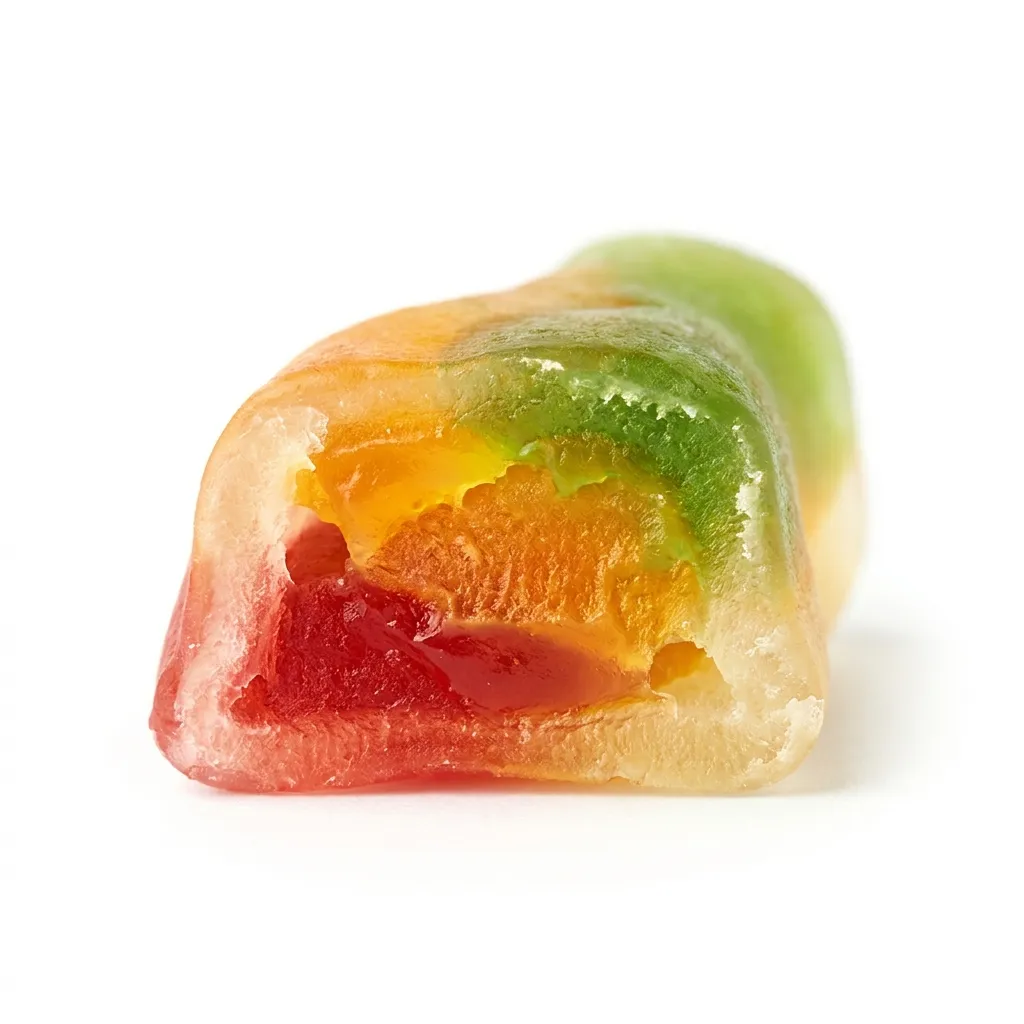
Why Sugar Free Sour Candy Is a Two-System Problem
Take sucrose out of a sour formula and the acid has to work against a different bulk, often one that is more hygroscopic or more prone to crystallizing. Regular citric or malic acid also dissolves readily on contact with moisture, which makes sugar-free sour formats less forgiving than a standard sour candy or a non-sour sugar-free piece.
Hygroscopic bulks pull water to the surface, and free acid speeds that up, so the piece turns damp and sticky in the pack. Erythritol at high inclusion can crystallize and give a gritty bite. Acid also suppresses perceived sweetness, so the two curves have to be set together. If a residual sucrose cook is still present, free acid can also promote sugar inversion, covered in the Encapsulated Acids for Sour Hard Candy article. Where the formula contains no sucrose, that mechanism does not apply.
Choosing a Sweetener System for Sugar Free Sour Candy
Start with the format, then pick the bulk. Erythritol has limited solubility, crystallizes readily at high inclusion, and is about 70% as sweet as sucrose, so a high-intensity partner is usually needed. It also dissolves endothermically and can compete with fruit flavors. The Erythritol Stevia Blend uses erythritol as bulk and stevia as the high-intensity sweetener, with sweetness customizable at 1:1, 2x, or 4x relative to sucrose, which helps balance stevia bitterness. For gel behavior, see Erythritol Stevia Blend for Sugar-Free Gummies. For glass and cook-and-cool detail, see Sugar-Free Hard Candy.
Allulose gives a more sugar-like mouthfeel with less cooling, but it is hygroscopic and can make a hard-candy glass sticky or dull. Allulose-based blends usually fit gummies, soft candies, and sanded pieces better than a clear hard piece. The Monk Fruit Allulose Blend pairs allulose with monk fruit extract (mogrosides), with sweetness typically customizable from 0.7x to 1.5x relative to sucrose, including 1:1 replacement in many applications. Regulatory status for allulose is market-specific and should be confirmed in the target market. Maltitol offers sucrose-like body, but it is not zero calorie, and digestive tolerance can be a concern at high inclusion. Isomalt is commonly used in clear sugar-free hard candy because of its low hygroscopicity and thermal stability.
Acid Choice, Sanding, and Encapsulation for Sugar Free Sour Candy
Citric acid delivers a sharp, immediate, clean sour onset and is highly water-soluble. Citric acid anhydrous is preferred in dry, moisture-sensitive blends because it contains no water of crystallization. Malic acid gives a smoother, longer-lasting tartness and helps extend fruit flavor, especially apple, berry, and citrus notes. DL-malic acid is the form more commonly used in large-scale food manufacturing. A citric-plus-malic blend is a standard way to get a sharp onset and a longer finish; see Malic Acid vs Citric Acid for a fuller comparison.
On an acid-sanded piece, regular unencapsulated acid takes up moisture, releases early, and leaves a damp, sticky surface. In a sugar-free candy this is often worse, because the bulk may already be pulling water. The same moisture mechanism on deposited sour gummies is discussed in the sour gummy moisture problem article.
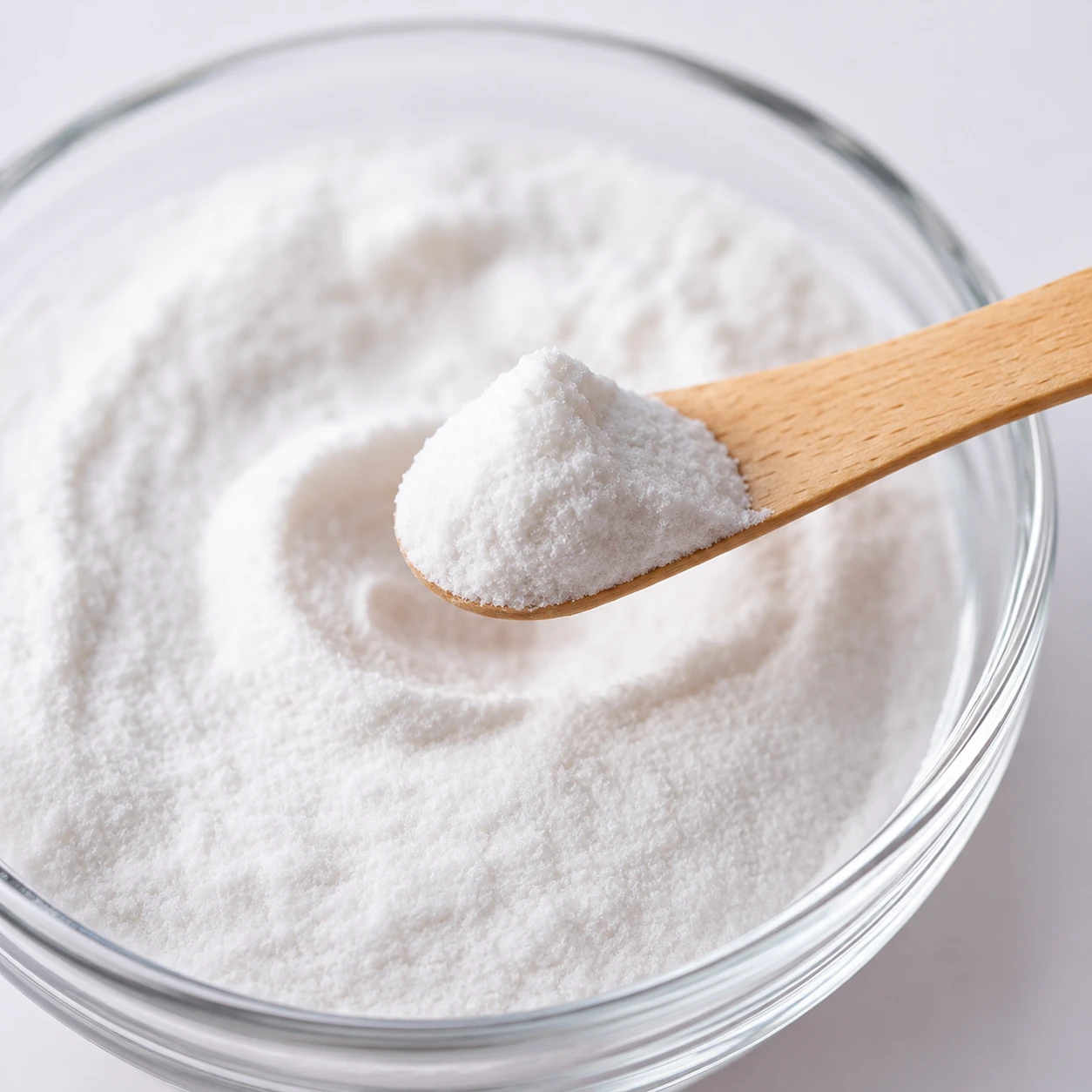
Encapsulated Citric Acid and Encapsulated Malic Acid are each available in moisture-triggered and heat-triggered systems, with customizable acid content, particle size, and release characteristics. Both are used in sour candy, including surface-applied acid powder coatings, as well as in hard candies, chewy sweets, and sour gummies.
By solubility, encapsulation systems are oil-type (hydrophobic) or water-soluble (hydrophilic). Hydrogenated vegetable oil (HVO) encapsulation is the default oil-type coating. Co-crystallization is a process, not a third wall material; confectionery uses it along with embedding and fusion. Moisture-triggered citric and malic grades are water-soluble systems made by co-crystallization and become available on contact with moisture, including saliva. They often fit surface application, and they should not be assumed to survive a high-solids cook or a wet deposit. Heat-triggered grades use an oil-type HVO coating that typically melts at 135-165°F / 57-74°C, a range that can be customized. If a heat-triggered grade is used in sanding, keep sanding and any later warm step below that melt range. If it is added to a mass already at or above the melt range, the coating can melt and release the acid early. Full grade details are on the product pages.
Encapsulation helps delay premature dissolution, reduce surface dampness and stickiness, and regulate when sourness develops. The two encapsulated acids can be blended to tune intensity and the onset-to-finish curve. Actual performance still depends on formulation, packaging, and storage.
FAQs
Can a sugar free sour candy use the same acid system as a sucrose sour candy?
Not always. Sugar-free bulks often need a more controlled acid delivery, such as an encapsulated grade, and the sweetness and acid curves should be set together.
Which bulk is a common starting point for a clear sour hard piece?
Isomalt is commonly chosen because of its low hygroscopicity and thermal stability. Use the Sugar-Free Hard Candy article for glass detail, then confirm the surface acid on the same base.
Do moisture-triggered encapsulated acids belong in a cooked mass?
They release on contact with moisture, so they generally fit surface application better than a high-solids cook or a wet deposit. Heat-triggered grades should stay below their melt range, typically 135-165°F / 57-74°C, during sanding and any later warm step.
Niranbio Tech supplies encapsulated citric acid, encapsulated malic acid, and the sweetener blends discussed above in standard and customized grades. Regular grades of the unencapsulated acids and sweeteners are supplied on the main Niran Bio site. Line trials remain the most reliable check before scale-up.