Encapsulation & Blending Solutions Since 2003

A single acid gives a single sour shape: one onset, one decay. A layered sour system candy profile uses citric, malic, and fumaric acids to place sourness at different moments, so the first hit, the middle tartness, and the lingering finish can each be tuned. This guide covers how the three acids combine, how ratio shifts the curve, and how encapsulated grades help the piece or its surface hold that designed profile.
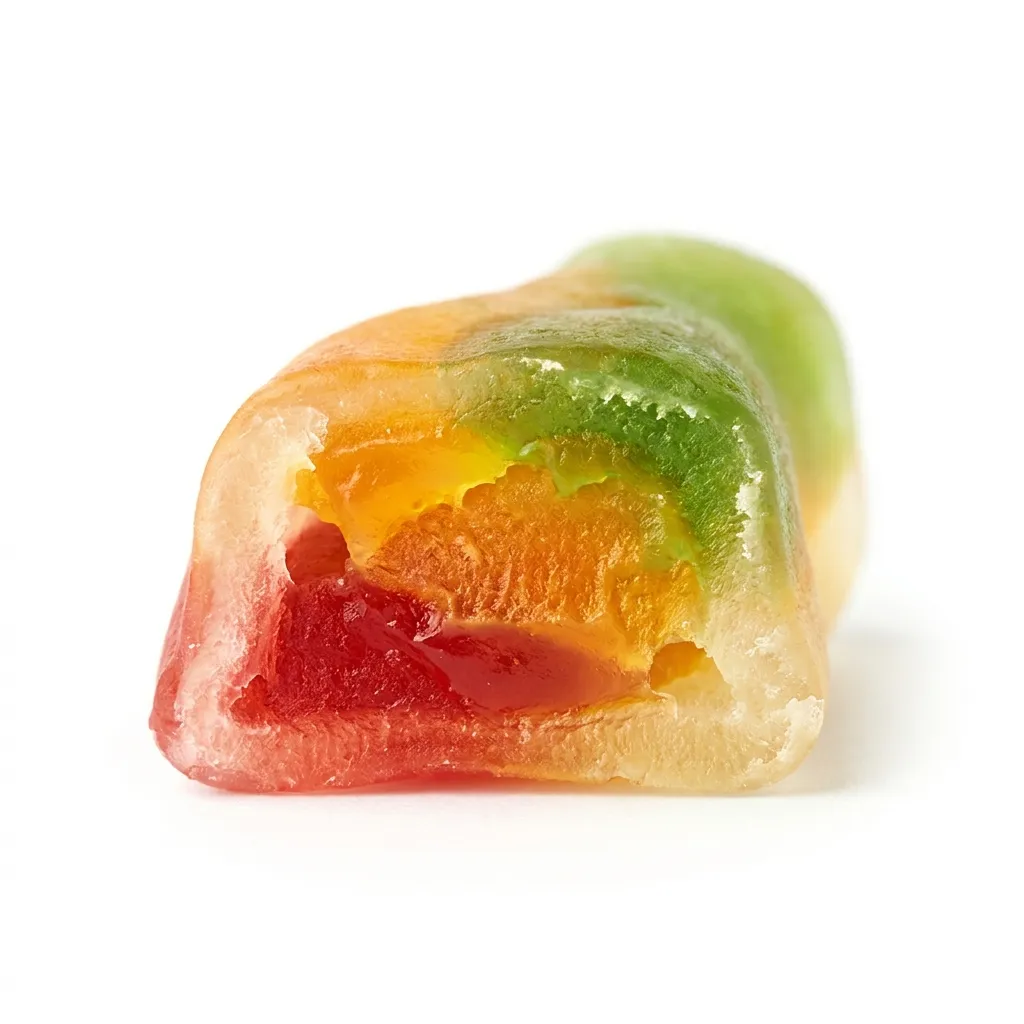
Three Acids, Three Positions on the Curve
The pairing logic for citric and malic is covered in Malic Acid vs Citric Acid, so only the short version is needed here. Citric acid gives a sharp, immediate, clean onset. Malic acid gives a smoother, longer-lasting tartness that helps carry fruit flavor. Commercial malic acid for food use is produced by fermentation, not extracted from fruit. Fumaric acid has lower solubility than either, so it dissolves more slowly and can add a further, longer sour layer after the first two have peaked. Citric opens the profile, malic sustains it, and fumaric extends the tail. Dropping any one layer does not remove sourness; it changes where the sourness sits in time.
| Role in the sour curve | Acid | Sensory timing | What encapsulation changes |
|---|---|---|---|
| Opening hit | Citric | Sharp, immediate, clean | Protects the onset layer until release |
| Mid-body and fruit support | Malic | Smoother, longer tartness | Keeps the tail from being used up early |
| Extended finish | Fumaric | Slower, lower solubility | Heat-triggered coating holds the third layer back |
How Ratio Shifts the Layered Sour System Candy Curve
These are directional shifts, not specifications. Treat any starting ratio as an illustrative point for bench and line trials. Change one variable at a time; moving citric and malic together makes it hard to tell which acid changed the curve.
- More citric, less malic: a faster, cleaner hit that fades sooner, with thinner fruit character late in the experience.
- More malic, less citric: a softer onset and a longer tail, with better fruit support but a less assertive opening.
- A small fumaric addition: a late layer that leaves the opening largely unchanged. Because solubility is low, a modest addition is usually enough; too much can make the finish feel flat and lingering rather than layered.
A practical trial path is to start with citric, add malic to extend the tail, then introduce fumaric in small steps. Evaluate the piece fresh and after storage, and score onset, mid-body, and finish separately.
Why Ratios Drift Without Protection
In a regular unencapsulated blend, acids dissolve and absorb moisture at different rates, so the effective ratio at the point of eating can differ from the ratio that was weighed in. Citric and malic are more hygroscopic than fumaric and will pull water from the surrounding matrix more readily. The opening layer can weaken or migrate, and the intended balance is lost. Encapsulation protects each particle, so the three acids are held apart until release and the designed ratio stays closer to what is actually delivered. Acid-driven sucrose inversion is a separate topic and is treated on its own.
Choosing Encapsulated Grades for Each Layer
Encapsulated grades come in oil-type (hydrophobic) and water-soluble (hydrophilic) systems. Hydrogenated vegetable oil (HVO) is the default oil-type coating. Co-crystallization is a process rather than a third wall material; in confectionery it is used along with embedding and fusion.
- Opening layer: Encapsulated Citric Acid is offered as a moisture-triggered grade (citric acid 97% or higher with sodium citrate, 30-80 mesh) and a heat-triggered HVO grade (citric acid 90 ± 2%, 20-60 mesh). Regular citric acid anhydrous is the unprotected alternative; see Encapsulated Citric Acid vs Regular Citric Acid.
- Middle layer: Encapsulated Malic Acid is offered as a moisture-triggered co-crystallized grade (malic acid 75 ± 3% with sodium malate, 25-60 mesh) and a heat-triggered grade (malic acid 90 ± 2%, 25-60 mesh). The regular counterpart is DL-malic acid, compared in Encapsulated vs Regular Malic Acid.
- Finishing layer: Encapsulated Fumaric Acid is heat-triggered only (fully hydrogenated vegetable oil coating, fumaric acid 85 ± 3%, 30 mesh). The unprotected option is regular fumaric acid.
All heat-triggered grades have a typical melt range of 135-165°F / 57-74°C, which can be customized. If a heat-triggered grade is used in sanding or a later warm step, keep that step below the melt range. In the mouth, saliva supplies moisture for moisture-triggered grades, and heat-triggered coatings must also be disrupted or dissolved in use.
Applying a Layered Sour System Candy Across Formats
The same three-layer logic carries across formats, but where the acids sit changes. On sanded pieces, the first contact is dominated by the surface mix: citric for the opening hit, with malic and a small fumaric share to extend the tail. In sour chewy candy, acid can sit in the body and on the coating, and encapsulation helps keep the later layers from being consumed by residual moisture. In sour hard candy, cook temperature is the constraint, so grade choice depends on when the acid is added. A panned coat can hold all three layers in one surface system. For extruded belts, see sour belts and acid migration rather than applying a coating-style approach unchanged.
Niranbio Tech supplies encapsulated citric, malic, and fumaric acids in standard and customized grades, and line trials remain the most reliable check. Regular unencapsulated grades are supplied on the main Niran Bio site.
FAQs
Do I need all three acids for a layered profile?
No. Citric and malic already give an opening layer and a sustained layer. Fumaric is worth trialing when the tail needs to extend beyond what malic provides.
Can I use a heat-triggered fumaric grade in a warm sanding step?
Yes, provided the step stays below the melt range of the coating. Typical melt range is 135-165°F / 57-74°C and can be customized to the process.
Does encapsulation change the sour taste itself?
It changes timing and stability rather than the character of the acid. The acid is held back until release, which helps preserve the intended onset and finish.