Encapsulation & Blending Solutions Since 2003

Acid sanding applies a dry acid powder, often blended with sugar or dextrose, to a finished candy surface that is slightly tacky or pre-wetted. Sour panning builds the acid into a sugar or polyol coating applied in a pan, layer by layer, with drying between steps. In the acid sanding vs sour panning decision, the right choice depends on the piece, the sour curve you want, and how much heat and moisture the acid will see before it reaches the consumer.
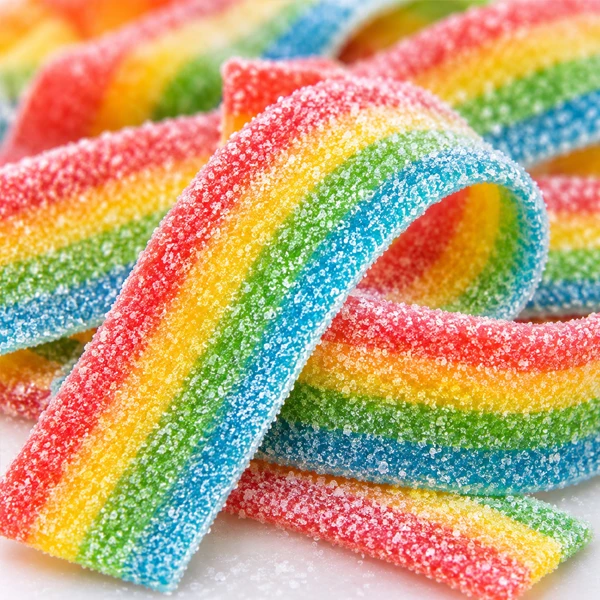
Acid Sanding vs Sour Panning: Process Differences
The two routes put acid in different places. Sanding leaves a loose, dry layer on a finished piece. Panning places acid inside a shell built over several passes, so the center is not itself the sour carrier, and the acid is present during every warm, wet stage of that build. Sanding is common on gummies, extruded belts or strips, and some hard or chewy pieces. Panning suits centers that need a shell, with more control over coating thickness and a smoother, more uniform look than a dry dusting.
Heat and Moisture Exposure
A sanded surface sees little heat but is exposed to moisture from the air, the piece, and pack contacts. Regular citric or malic acid dissolves readily on contact with moisture, which can mean early dampness, stickiness, and a sour hit that fades as acid leaves the surface. For deposited gummies, see the Sour Gummy Moisture Problem. Sanding also keeps acid out of a hot cook; addition-point tradeoffs for hard candy are covered in Encapsulated Acids for Sour Hard Candy.
A panned shell sees warm syrup, humidity, and repeated drying cycles. Free acid in a hot syrup can dissolve early, migrate within the shell, and act on the sucrose, including sugar inversion. Moisture and drying in the pan still have to be managed on the line.
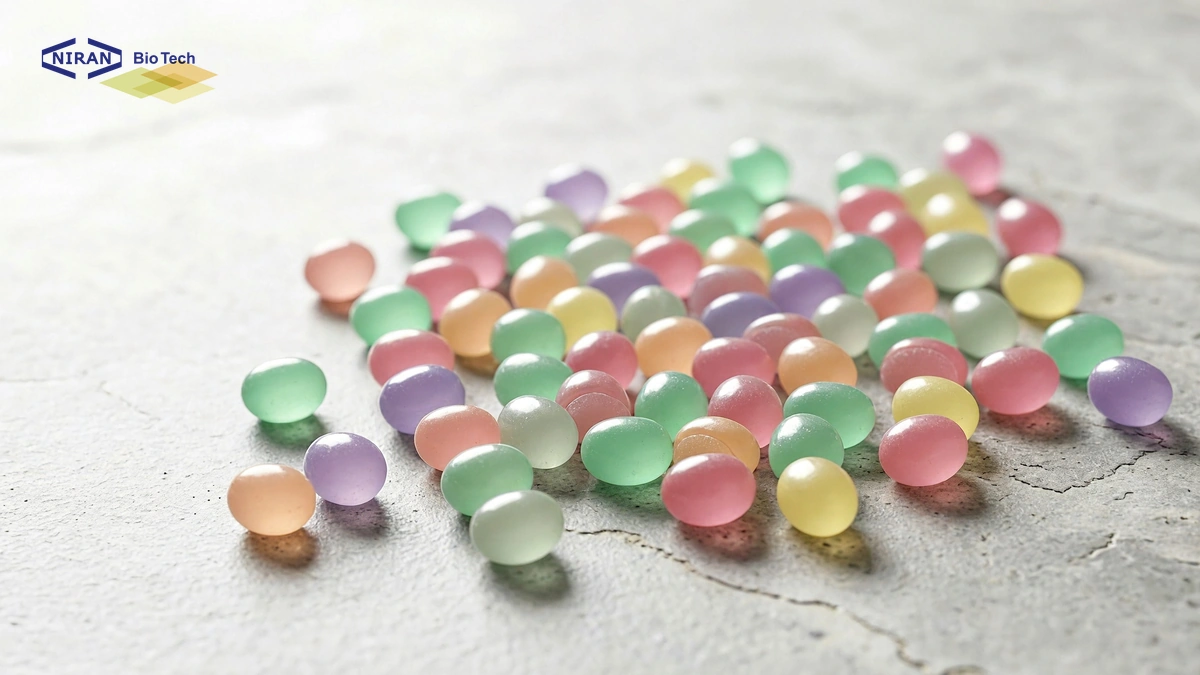
Appearance and Sour Delivery
Sanding delivers a fast, front-loaded sour because the tongue meets dry acid directly. The tradeoff is exposed powder that can shed in the pack, pick up moisture, and fade in storage. Panning delivers sourness through the shell as it dissolves, with coating thickness as a lever and a typically smoother, more uniform finish. The tradeoff is tighter control of syrup heat, humidity, and drying.
For how different acids are layered to shape the sour curve, see Layered Sour Systems.
How Encapsulated Acids Support Each Route
Encapsulated Citric Acid is documented for surface-applied powder coatings on sour candy, including gummies, hard candies, and chewy sweets, and can help reduce premature dissolution, surface dampness, and stickiness. Encapsulated Malic Acid can be used in sour candy sanding and sugar coating to help control sourness, reduce premature release, and improve surface stability.
Moisture-triggered grades release on moisture contact, including saliva, and often fit sanding. Do not assume they survive a high-solids cook or a wet, hot syrup step intact. Heat-triggered grades use a hydrogenated vegetable oil (HVO) coating that melts within a set temperature range. Keep sanding, panning, and any later warm step below that melt range. If the coating melts in the pan, the benefit is gone. Confirm on the line.
Encapsulation limits early acid exposure only while its barrier remains intact; the coating still needs suitable temperature and moisture conditions.
Side-by-Side Comparison and Which Route Fits
| Factor | Acid sanding | Sour panning |
|---|---|---|
| How sour is applied | Dry powder on finished piece | Acid in sugar or polyol shell, built in layers |
| Heat the acid sees | Low, finishing step only | Warm syrup, repeated passes |
| Moisture the acid sees | Air, piece, pack contacts | Syrup, humidity, drying cycles |
| Sour profile | Fast, surface-first hit | Shell-delivered, tunable by thickness |
| Appearance | Loose, sanded look | Smoother, more uniform coating |
| Where encapsulation helps | Delays dissolution, keeps surface drier | Limits early contact if the barrier survives the pan steps |
| Watch-outs | Exposed powder, moisture pickup | Syrup heat, humidity, drying compatibility |
Sanding fits a dry, immediate surface sour, a simpler finishing step, or a cooked center that should not carry acid. Extruded strips are one sanded example; see Sour Belts and Extruded Sour Candy. Panning fits sourness built into a shell, a smoother coated appearance, or a center that does not carry the acid, with the acid grade matched to the syrup heat, humidity, and drying on the line.
Regular citric acid anhydrous and DL-malic acid dissolve readily, so they place the most demand on moisture control in either route.
FAQs
Do anti-caking agents protect the acid in an acid sanding blend?
They can improve powder flow, but they do not create a protective barrier around the acid. Better flow and delayed acid dissolution are different functions.
Is sugar inversion the cause of every sticky shell in sour panning?
No. Inversion requires sucrose. A polyol shell without sucrose can still become tacky from moisture, so the cause should not automatically be assigned to sugar inversion.
Conclusion
Niranbio Tech supplies encapsulated citric and malic acids that can be matched to coating conditions. Acid sanding gives a surface-first sour layer; sour panning carries the acid through a built-up shell, making compatibility with the pan’s heat and moisture essential.