Encapsulation & Blending Solutions Since 2003

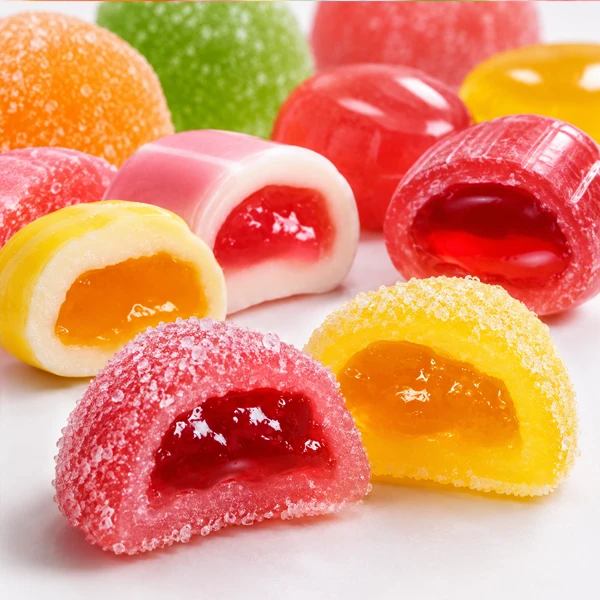
Sour panned candy is a confection in which the sourness is built into a sugar or polyol coating applied in a pan, layer by layer, with drying between passes. The shell, rather than the center, is the sour carrier. That puts the acid inside the warm, wet stages of the build, which is exactly where free acid behaves worst.
Why the Shell Is Harder on Acid Than a Dry Surface
A panned shell is assembled from warm syrup, humid air, and repeated drying cycles. Every layer is wet when it goes on and must lose moisture before the next one arrives, so acid is present while water can still move it.
Regular citric acid (citric acid anhydrous) and regular malic acid (DL-malic acid) dissolve readily on contact with moisture. In a panning syrup, that can mean early dissolution, migration through still-wet coats, and action on sucrose in the shell, including sugar inversion in a hot syrup. Invert sugars are more hygroscopic than sucrose, so a partly inverted shell tends to hold water and feel tacky. That chemistry is covered in How Encapsulated Acids Prevent Sugar Inversion.
How Humidity and Drying Decide Sour Panned Candy Quality
Panning delivers sourness through the shell as it dissolves, with coating thickness as a lever and a typically smoother finish than a dry dusting. If you are still choosing between a dusted and a panned format, see Acid Sanding vs Sour Panning.
Within the panning route, the failure modes follow the moisture path. Humid air in the pan slows drying and extends the time acid can dissolve and move. Incomplete drying between layers leaves residual water that can carry acid from a new coat into the one below. A shell that leaves the pan slightly under-dried, or that sits in a humid pack, can keep drifting after packing. The symptoms usually show later: tackiness in the pack, patchy sourness, or a weaker sour coat.
Where Encapsulation Protects a Sour Panned Candy Shell
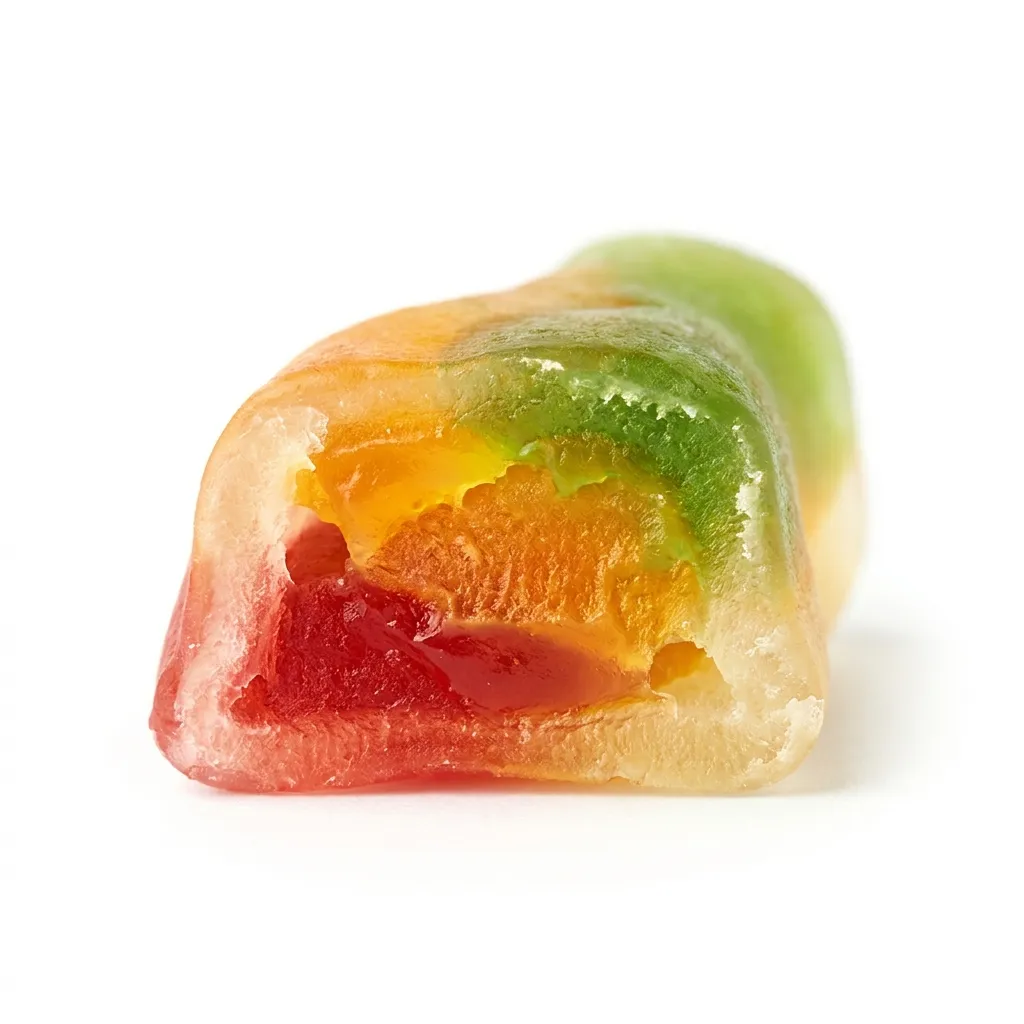
An encapsulated acid is separated from the syrup by a coating or a co-crystallized matrix. If that barrier stays intact through the warm, moist pan steps, it can help hold the acid in the intended layer until the shell is dry and, later, until the piece is eaten.
Encapsulated Citric Acid is documented for surface-applied acid coatings on sour candy and can help reduce premature dissolution, dampness, and stickiness. Encapsulated Malic Acid is listed for sugar coating, where it can help control sourness and improve surface stability. For a longer sour tail, Encapsulated Fumaric Acid is also available; regular fumaric acid is less soluble than citric or malic, so it dissolves more slowly.
Matching the Trigger to the Pan Stage
The trigger must match the pan stage. Moisture-triggered grades can release in a wet syrup; heat-triggered HVO grades lose their barrier above the coating’s melt range, typically 135-165°F / 57-74°C for the stated standard grades. A pan trial must therefore check that the barrier survives the actual coating conditions.
| Stage | What free acid can do in the shell | What encapsulation changes | What still has to be controlled |
|---|---|---|---|
| Syrup application | Dissolves early, begins to migrate | Keeps acid particulate if coating holds | Syrup temperature versus melt range |
| Layer build | Moves into still-wet coats | Helps hold acid in its layer | Layer moisture and coat thickness |
| Drying between passes | Acts on sucrose, raises tackiness | Limits acid-sugar contact | Complete drying every cycle |
| Finishing and storage | Surface dampness, sour fade, sticky pieces | Helps keep the designed layer in place | Humidity, drying, and packaging |
Drying and humidity control remain necessary even with a protected acid. Acid balance and release profiles are discussed separately in Layered Sour Systems.
FAQs
Can encapsulated acid replace regular acid at the same weight in sour panned candy?
Not automatically. The coating or matrix contributes part of the ingredient weight. Calculate the acid contribution from the stated acid content, then check the resulting sourness in the finished shell.
Is pan air temperature enough to assess acid release in sour panned candy?
No. The acid contacts the syrup and wet coating, not only the air. The assessment needs the temperature and moisture exposure at that contact stage.
Conclusion
Niranbio Tech supplies encapsulated citric, malic, and fumaric acids for controlled acid delivery. In sour panned candy, matching the protective barrier to wet coating steps and drying each layer properly helps retain the intended sour profile.