Encapsulation & Blending Solutions Since 2003

Extreme sour candy usually means a higher acid load and a sharper, longer sour curve. Putting more unprotected acid into the base does not leave that acid neutral. In a cooked mass it can invert sucrose, on a surface it pulls moisture, and in a gel it can weaken the structure. A piece may taste sour on day one and look or feel wrong later. Raising intensity without damaging the base is a placement and protection problem, not only a matter of adding more acid.
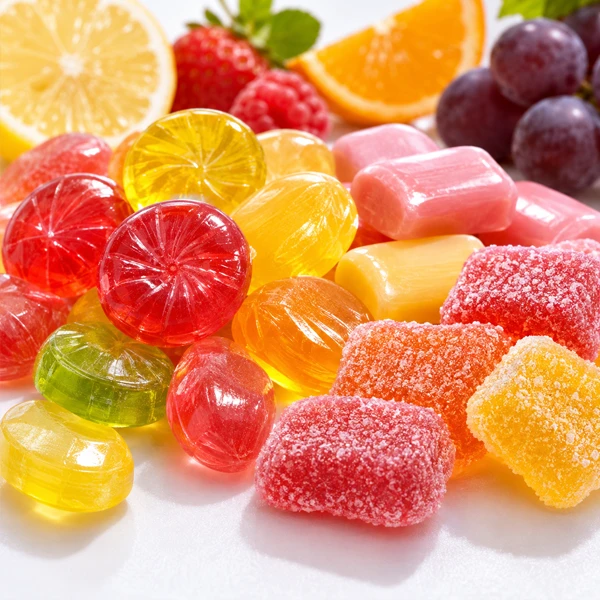
Why More Free Acid Damages Extreme Sour Candy
Inside a cooked sugar mass. Free acid catalyzes sucrose inversion, the hydrolysis of sucrose into glucose and fructose. Invert sugars are more hygroscopic than sucrose, so the piece holds more moisture, the surface can dull or turn sticky, and the glass is more likely to grain. The mechanism is covered in How Encapsulated Acids Prevent Sugar Inversion. The more free acid that sees heat and sugar together, the more of the base is converted.
On a surface. Regular citric and malic acid dissolve readily on contact with moisture. On a sanded or coated piece they draw water from the air or from the piece itself, which wets the coating and makes it sticky. Dissolved acid then migrates inward, and perceived sourness fades even though the acid is still in the piece. A related gummy-coating case is treated in the sour gummy moisture problem article.
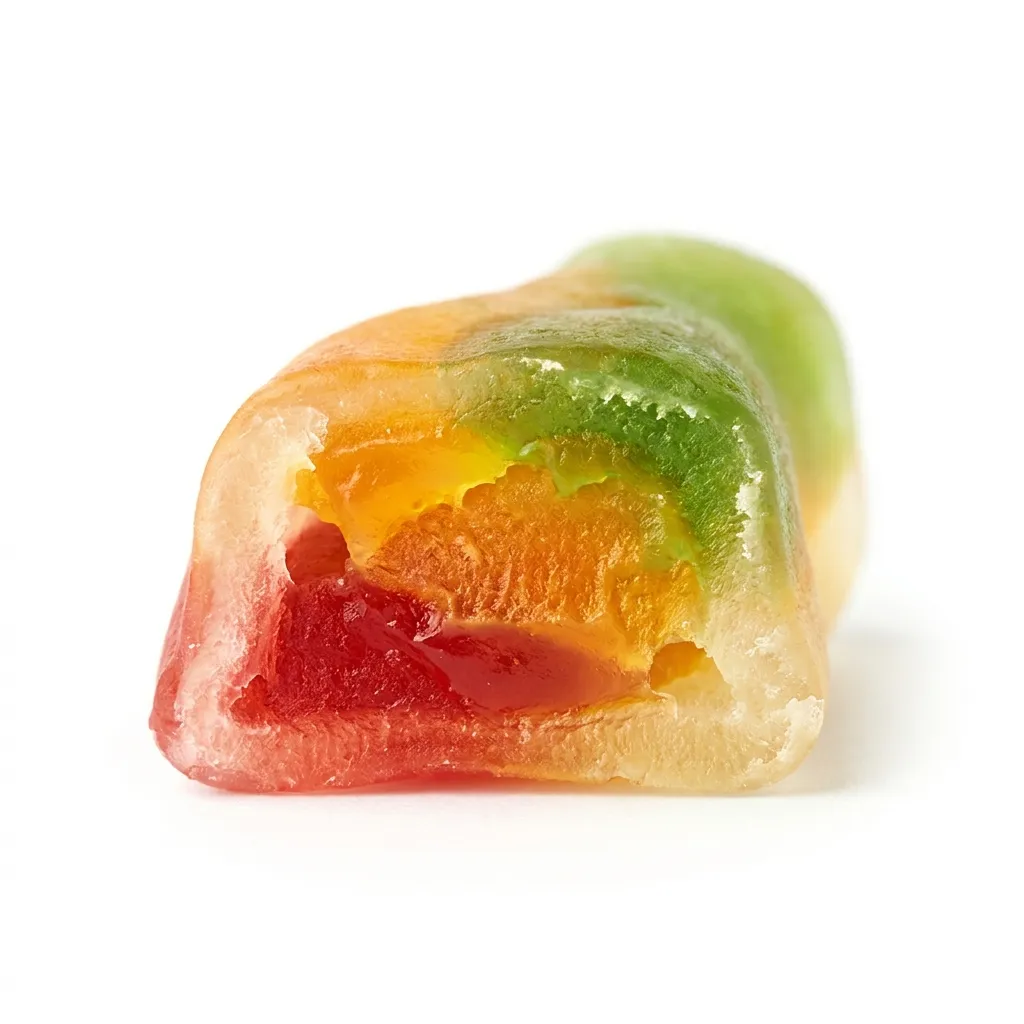
Inside a gel. Surplus free acid in the mass can interfere with setting or weaken the gel later. Acid-catalyzed hydrolysis can reduce gelatin firmness. For pectin, pH has to stay inside the gelling window, or the gel can fail or pre-gel.
What Changes When Acid Is Protected or Placed
The table summarizes the risk in an unprotected system and what placement or encapsulation changes.
| What you increase | Unprotected acid in the base | Placement or encapsulation |
|---|---|---|
| Acid in the cooked mass | More inversion, more hygroscopic sugar, graining risk | Keep the cook lean; add protected acid late or move it to the surface |
| Acid on the surface | Moisture pickup, stickiness, migration inward | Barrier-coated grades hold the acid at the surface until the trigger |
| Acid in a gelled piece | Weaker or failed gel, pre-gelling in pectin | Reduce free acid in the mass; place sourness where it is tasted |
| Single-acid dose | One part of the sour curve gets louder | Blend acids to shape onset and finish |
Acid should be available where it will be tasted, not left in contact with the sugar, water, or gel it can damage.
Building an Extreme Sour Candy Profile by Acid Choice
Intensity is not one number. Citric acid gives a sharp, immediate, clean onset. Malic acid gives a smoother, longer-lasting tartness and helps extend fruit flavor. Fumaric acid is less soluble, so it dissolves more slowly and can add a longer sour tail. Raising only one acid lifts a single part of the curve and tends to load the base with that acid. Spreading the load lengthens the curve without making one acid carry the whole effect. How the three sit on a time curve is covered in Layered Sour Systems, and the first two are compared in Malic Acid vs Citric Acid.
For the unprotected share of a formula, regular citric acid anhydrous, DL-malic acid, and fumaric acid remain the baseline. The decision is which share should stay free and which should be protected.
Encapsulated Grades for Extreme Sour Candy
Encapsulation holds acid back until a chosen trigger, so more sourness is delivered in the mouth instead of spent on the base.
- Moisture-triggered grades use a water-soluble system. Encapsulated citric acid uses a sodium citrate system (citric acid 97% minimum). Encapsulated malic acid is co-crystallized with sodium malate (malic acid 75 ± 3%). They release on moisture contact, including saliva, and often suit surface application.
- Heat-triggered grades use a hydrogenated vegetable oil coating, a hydrophobic barrier against moisture. The citric and malic grades typically carry 90 ± 2% acid and melt at 135-165°F / 57-74°C; the range can be customized. Encapsulated fumaric acid is heat-triggered only, with a fully hydrogenated vegetable oil coating and fumaric acid 85 ± 3%.
Co-crystallization is a process, not a third wall material. Oil-type (hydrophobic) coatings resist humidity, while water-soluble (hydrophilic) systems hold acid until moisture arrives.
Process Timing for Extreme Sour Candy
Hard-candy cooking commonly runs hotter than the standard melt range of the heat-triggered grades. Added to a mass already at or above that range, those grades release early and behave like free acid. Add them late, once the mass is below the coating melt range, or apply acid to a formed, cooled surface. Moisture-triggered grades fit surface application better and should not be assumed to survive a high-solids cook intact. Addition timing is covered further in Encapsulated Acids for Sour Hard Candy.
Two further points apply to every encapsulated grade. The wall material means the acid content per kilogram is lower than in regular acid, so adjust for assay and confirm by sensory trial instead of swapping one-for-one. Encapsulation also does not replace packaging, humidity control, or process discipline.
FAQs
Does extreme sour candy have to use citric, malic, and fumaric acids together?
No. A single acid can still raise sourness. Using more than one shapes onset and finish so the extra load is not concentrated in one part of the curve. The blend is a tool, not a requirement.
Why can extreme sour candy taste weaker after storage even if the acid is still in the piece?
If unprotected surface acid dissolves and migrates inward, less acid remains where the tongue makes contact, so perceived intensity falls even though the acid has not left the candy. Encapsulation and drier handling help keep the acid where it was placed.
Can moisture-triggered and heat-triggered grades be combined in extreme sour candy?
Yes, when their triggers match the process. A moisture-triggered grade often fits a sanded or coated surface; a heat-triggered grade can be added late, in a mass that stays below its melt range. Confirm placement and the stored piece, not only the fresh taste.
Niran Bio Tech supplies encapsulated citric, malic, and fumaric acids in standard and customized grades. Line trials, including fresh and stored pieces, remain the most reliable check on any extreme sour candy formula.